

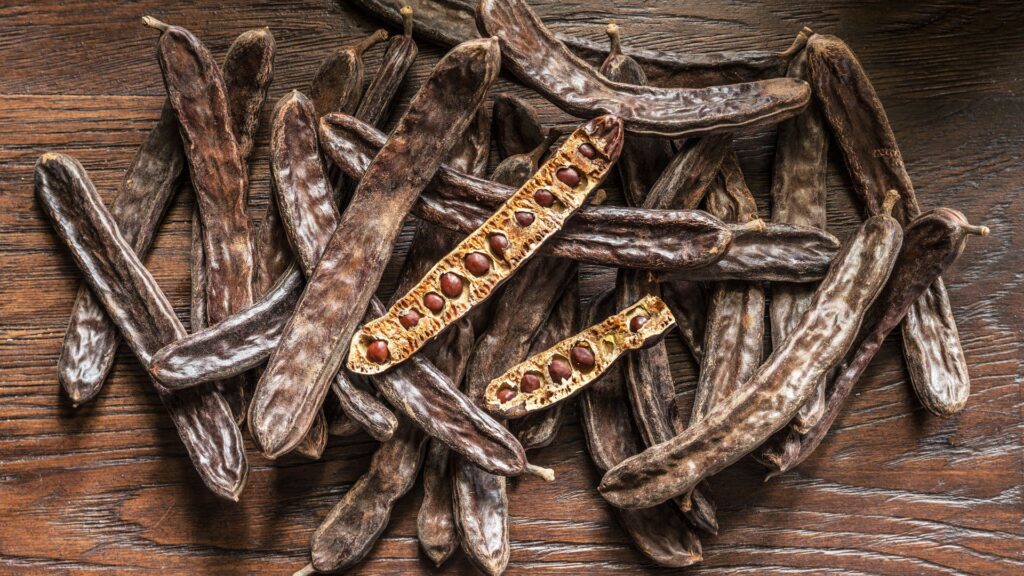
Carob stands out not because of processing, but because of its natural properties.
Carob is often described in simple terms, but what makes it truly interesting lies in its carob properties, including its natural composition and physical characteristics. Instead of being defined by processing or added ingredients, carob is largely shaped by what is already present in its original form.
Many modern foods are built through modification, refined, extracted, or combined with additional components. Carob follows a different approach. Its qualities develop naturally during growth, resulting in a mild taste, a firm and fibrous texture, and a product that can be used with very little preparation.
If you are new to carob, you can first get a general overview in our introduction to carob. In this article, we take a closer look at what defines it more precisely.
The focus here is not on trends or claims, but on understanding the natural carob properties, how carob is built from its composition to its physical structure, and how these elements shape the way it behaves.
Understanding Carob as a Natural Product
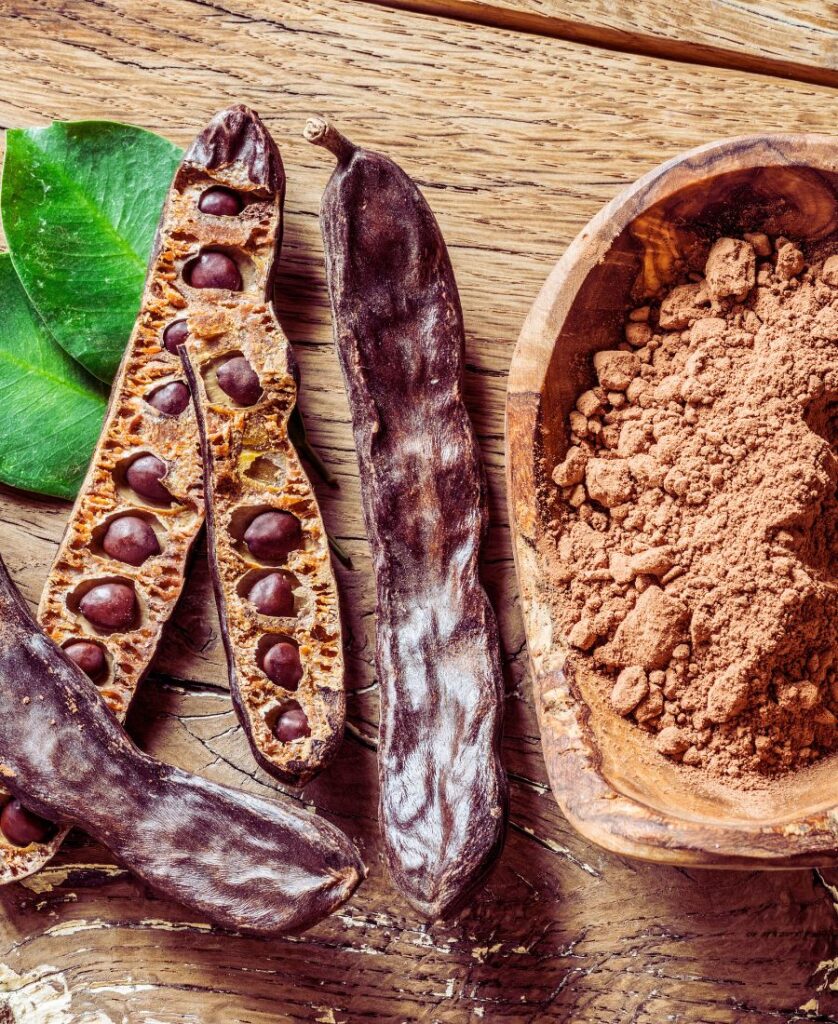
To understand carob properly, it helps to see it as what it is at its core: a natural, minimally processed food that remains close to its original state.
Carob pods develop on trees in warm, dry climates and form their characteristics gradually over time. Once harvested and dried, they can already be used without requiring complex transformation. This natural development is what gives carob its consistent and predictable nature.
Unlike many processed products, where the final result depends heavily on industrial steps, carob’s properties are already present in the raw material. Processing may change its form, but it does not fundamentally define its character.
This makes carob relatively easy to understand: its qualities come directly from how it grows, not from how it is engineered afterward.
If you want to explore how this translates into everyday use, you can also look at how carob is used in practice.
Natural Composition of Carob
Carob is defined not only by how it looks and tastes, but by its carob properties, especially its natural composition. These internal components influence its flavor, texture, and general behavior without relying on added substances.
Instead of being constructed through processing, carob can be understood by looking at a few key elements that are already present in the pod itself.
The main natural components of carob include:
- naturally occurring sugars, contributing to its mild sweetness
- dietary fiber, forming its dense and structured texture
- low fat content, especially in comparison to cocoa
- a naturally caffeine-free composition, making it distinct from similar products
These components are not added or adjusted. They are part of the raw material itself and explain why carob behaves the way it does in different forms.
Naturally Occurring Sugars
Carob has a naturally mild and slightly sweet taste, which comes from sugars already present in the pod. Unlike many foods, this sweetness does not depend on added ingredients.
Dietary Fiber Content
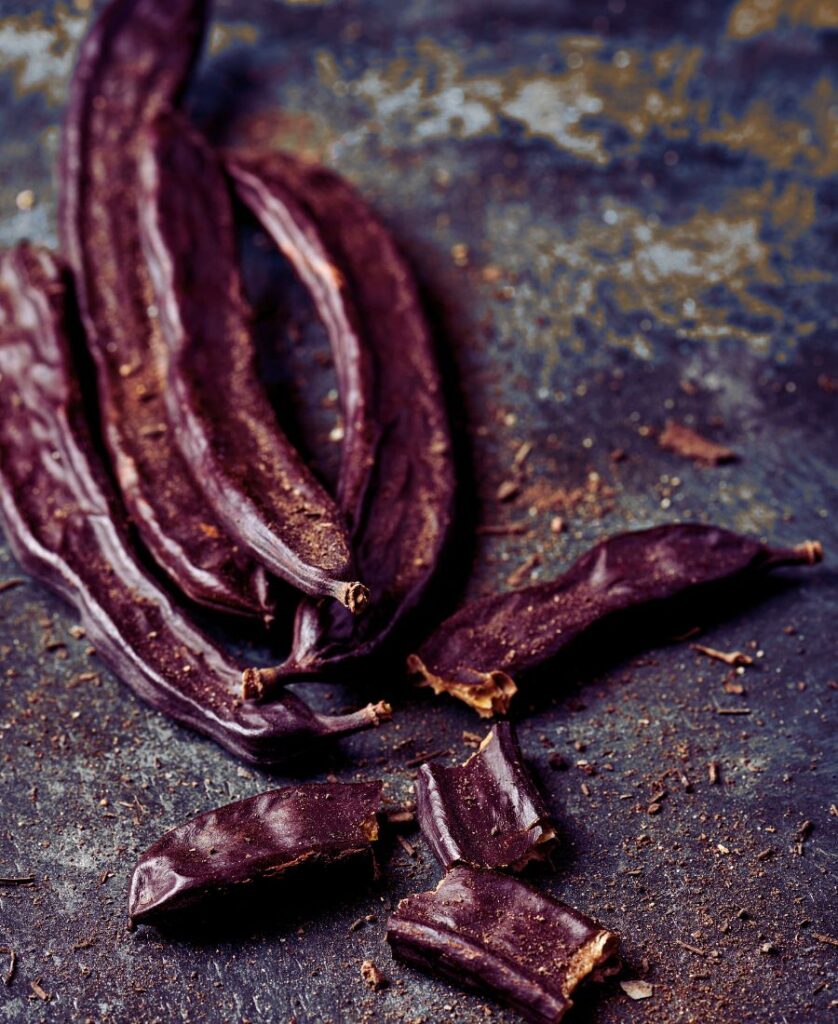
The pod contains natural dietary fiber, contributing to its dense and structured texture. This is part of its natural composition and remains consistent across different forms.
Low Fat Content
Compared to cocoa, carob is naturally low in fat, which is a characteristic of the raw product itself, not the result of processing.
This difference is one of the reasons carob is often considered a distinct alternative when compared to similar ingredients. You can explore this further in our carob vs cocoa comparison.
Naturally Caffeine-Free
Carob is naturally free from caffeine, which sets it apart from cocoa. This is not due to removal or processing, but simply part of its original composition.
Physical and Natural Characteristics

Beyond its composition, these carob properties also include its physical characteristics. These influence how it feels, how it can be handled, and how it performs in different forms.
Unlike products that are heavily modified during processing, carob retains much of its original structure, resulting in stable and recognizable traits.
Some of the most noticeable physical traits include:
- a dense and fibrous interior
- a firm outer structure
- a long shelf life once dried
- a form that remains stable without processing
Dense and Fibrous Structure
Carob pods have a naturally dense and fibrous structure, which remains stable even after drying and allows them to be used in different forms.
Naturally Long Shelf Life
Once dried, carob can be stored over long periods without requiring special preservation methods, making it a reliable product in different environments.
Minimal Processing Required
Carob requires very little processing to be usable. After drying, it can already be consumed or prepared in simple ways.
If you are interested in how these characteristics translate into practical use, you can explore different ways to use carob here.
How Carob Differs in Composition from Cocoa
Carob and cocoa are often compared because they can appear similar at first glance. However, their natural composition differs significantly.
Key compositional differences:
- sweetness: carob contains natural sugars, cocoa has a more bitter base
- fat content: cocoa is naturally higher in fat, carob is lower
- caffeine: cocoa contains caffeine, carob does not
- usage profile: cocoa often requires adjustment, carob can be used more directly
If you want a broader comparison beyond composition, you can explore the full carob vs cocoa guide.
Why These Properties Matter in Everyday Use
These carob properties influence how easily it fits into everyday situations and how it is typically used in practice.

In everyday use, this can make a noticeable difference:
These aspects help explain why carob is often considered practical and easy to handle in everyday life.
Instead of needing to be adapted or modified, it can be used in a way that remains simple and flexible.
In the end, it is not about specific outcomes or expectations, but about how naturally something integrates into daily routines without adding complexity.


