

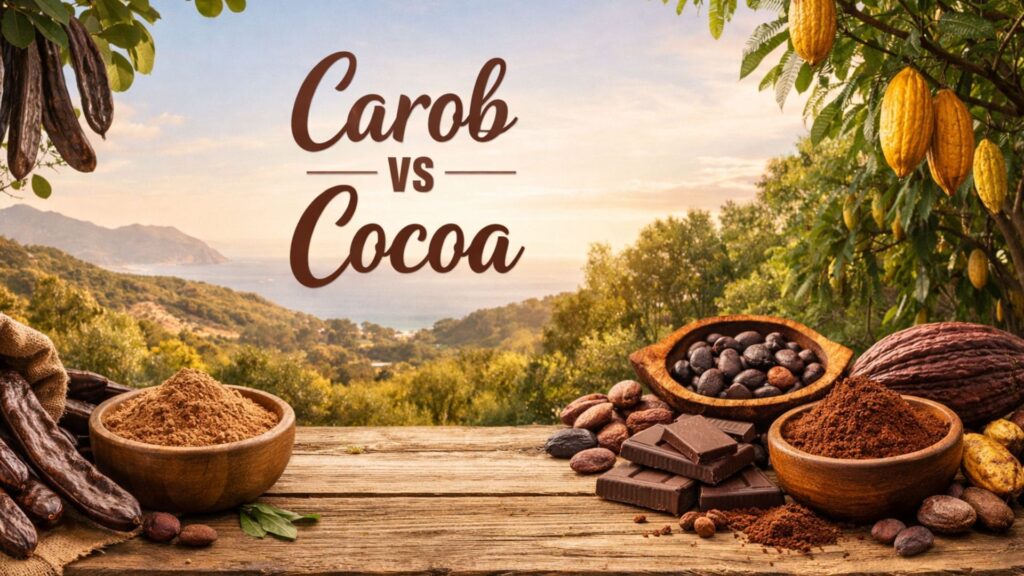
Carob and cocoa are often compared because both are used in sweet foods and drinks, but they are not the same. Cocoa comes from cacao beans and is known for its rich, bitter flavor, while carob comes from the pod of the carob tree and has a naturally sweet, mild taste. In this guide, we look at the real difference between carob and cocoa, including taste, sweetness, caffeine, uses and which one may suit you better.
Carob vs Cocoa at a Glance
At first glance, carob and cocoa may seem similar because both are linked to sweet foods, desserts and warm drinks. But once you look a little closer, the differences become clear. They come from different plants, taste very different and are used for slightly different reasons.
The main difference in one sentence
The main difference is simple: cocoa comes from cacao beans and has a rich, bitter taste, while carob comes from the pod of the carob tree and is naturally sweet, mild and caffeine free.
Why people compare carob and cocoa
People often compare carob and cocoa because carob is widely seen as a natural alternative to cocoa. Both can be used in sweet recipes, snacks and drinks, but they create a different result. Cocoa is deeper, darker and more intense, while carob is softer, sweeter and easier to enjoy without added sugar.
What Is Carob?
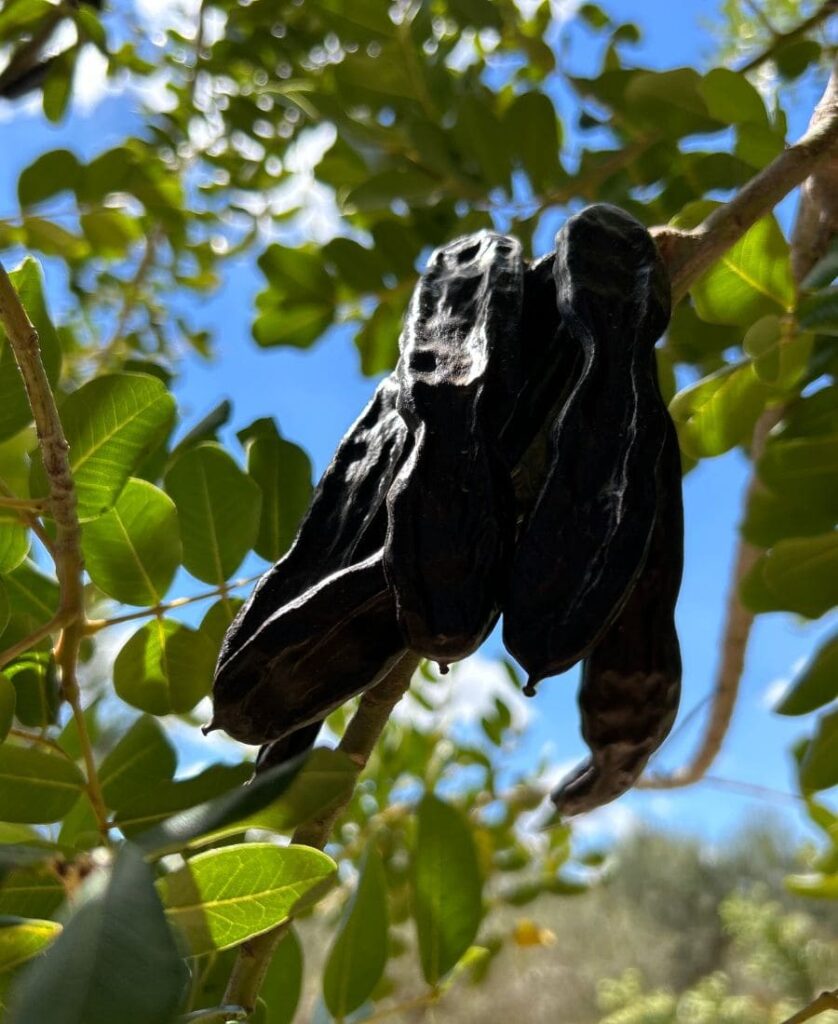
Carob comes from the carob tree, an evergreen Mediterranean tree known for its long brown pods. Unlike cocoa, which is made from fermented cacao beans, carob is made from the pod itself. Once ripe, the pods can be dried and roasted, developing their mild, naturally sweet flavour.
Where carob comes from
Carob comes from the Ceratonia siliqua tree, which grows mainly in warm Mediterranean regions. It has been valued for centuries in places such as Portugal, Spain, Italy, Greece and parts of North Africa. The tree is well adapted to dry climates and produces dark pods that are harvested when fully mature.
How carob is naturally sweet
One of the most distinctive things about carob is its natural sweetness. The pod contains naturally occurring sugars, which give it a soft, caramel-like taste without the bitterness commonly associated with cocoa. Because of this, carob often needs less sweetening and can be enjoyed in a more natural form.
What Is Cocoa?
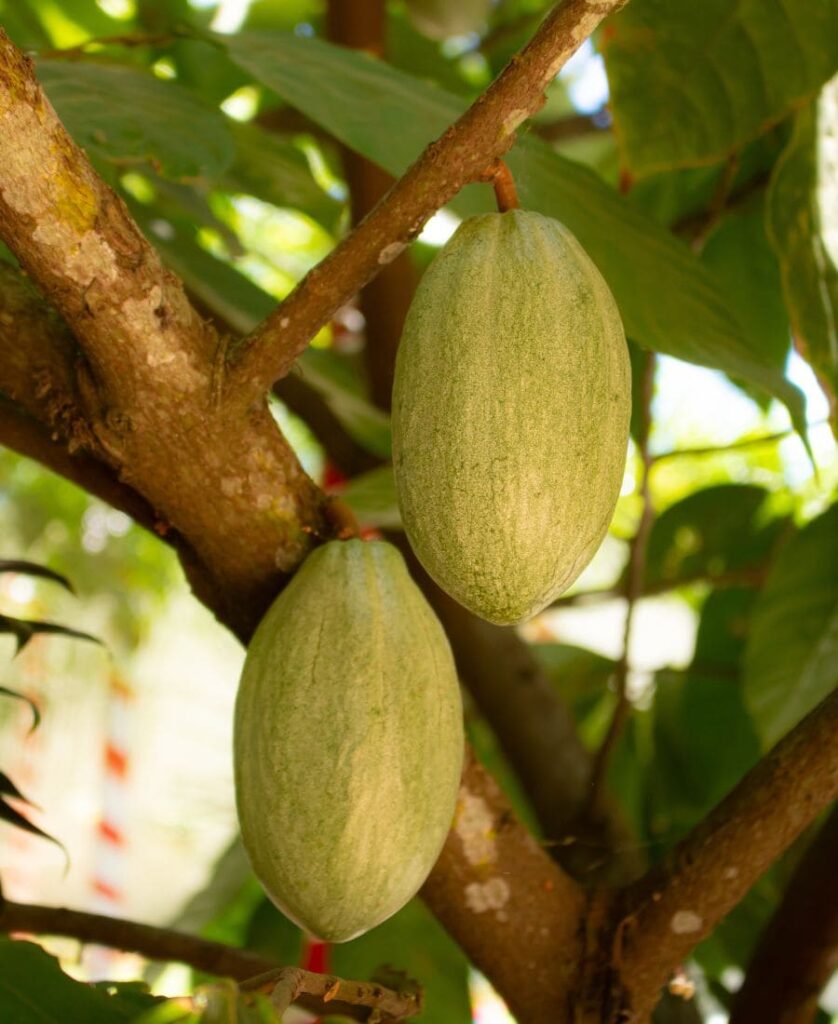
Cocoa comes from the seeds of the cacao tree, known as cacao beans. These beans grow inside large pods, are removed after harvest, then fermented, dried and roasted before being turned into cocoa products. This process gives cocoa its deep, rich and more intense flavour.
Where cocoa comes from
Cocoa comes from the Theobroma cacao tree, which grows in warm tropical regions. It is mainly cultivated in parts of West Africa, South America and Southeast Asia. Unlike carob, which is closely linked to the Mediterranean, cocoa comes from humid climates and has a very different agricultural background.
Why cocoa tastes more bitter
Cocoa tastes more bitter because cacao beans naturally contain compounds that create a darker, sharper and more intense flavour. It is also usually less sweet in its natural form. While carob is mild and naturally sweet, cocoa often needs sugar or other ingredients to balance its bitterness and make it more pleasant in desserts and drinks.
Carob vs Cocoa: Key Differences
Carob and cocoa may appear similar at first, but they differ in several important ways. From flavour and sweetness to processing and everyday use, each has its own character.
Taste
The taste is one of the biggest differences. Cocoa has a deep, rich and slightly bitter flavour that many people associate with dark chocolate. Carob tastes milder, softer and naturally sweeter, often with gentle notes that remind people of caramel or toasted sweetness.
Sweetness
Carob is naturally sweet, so it often needs little or no extra sugar depending on how it is used. Cocoa is much less sweet in its natural form and usually needs sweetening to create a balanced flavour in desserts, drinks or snacks.
Caffeine and stimulants
Another major difference is that carob is naturally caffeine free. It does not contain the same stimulants that are associated with cocoa, which makes it a gentler option for people who prefer to avoid caffeine or want a milder alternative.
Processing
Cocoa goes through a more intensive process. The cacao beans are removed from the pod, fermented, dried and roasted before becoming cocoa powder or chocolate ingredients. Carob is simpler in this regard, as the ripe pod itself is dried and often roasted, which helps bring out its natural sweetness and flavour.
Typical uses
Cocoa is commonly used in chocolate, baking, desserts and hot drinks where a bold, rich taste is wanted. Carob is often used as a natural alternative in similar settings, but it also works well on its own because of its mild sweetness. Whole roasted carob pods can also be enjoyed in a more natural and less processed way than cocoa products.
Which One Is Better for You?
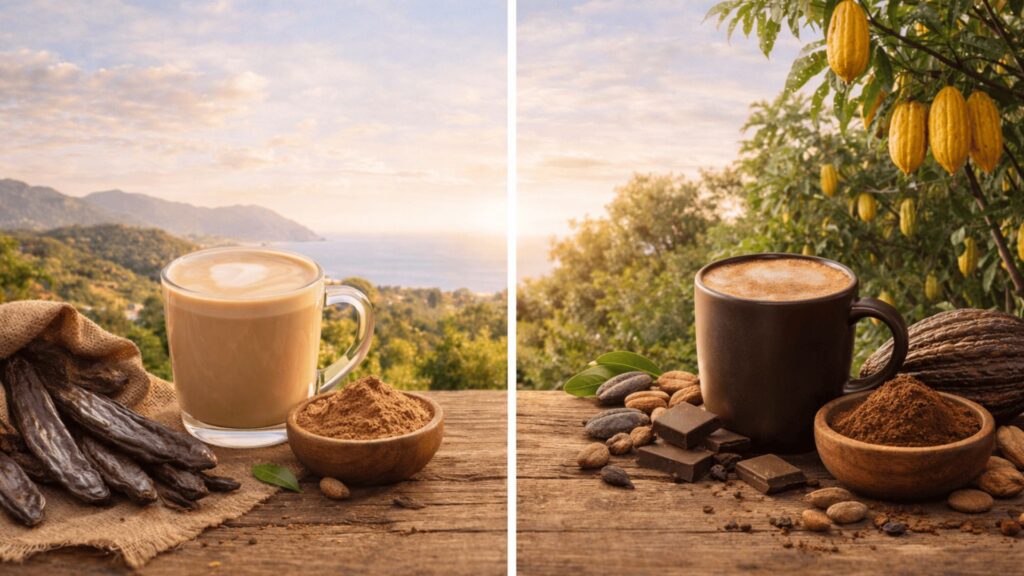
There is no single answer for everyone, because carob and cocoa offer different qualities. The better choice depends on what you are looking for in terms of taste, sweetness and everyday use.
When carob may be the better choice
Carob may be the better choice if you prefer a naturally sweet, mild flavour and want something gentler. It is especially appealing for people who want an alternative to cocoa without the bitterness or the stimulating effect often associated with chocolate-based products. It can also be a good option when you want a simple ingredient that feels more natural and less intense in taste.
When cocoa may be the better choice
Cocoa may be the better choice if you enjoy a deeper, richer and more classic chocolate flavour. It works especially well in recipes where a strong, bold taste is part of the experience. For many people, cocoa remains the first choice for baking, desserts and drinks when intensity and richness matter more than natural sweetness.
Which One Tastes Better?
That depends entirely on personal preference. Some people enjoy the bold, intense taste of cocoa, while others prefer the softer and naturally sweeter character of carob. Neither is universally better, they simply offer a different flavour experience.
Carob’s mild, naturally sweet flavor
Carob has a gentle, rounded taste that feels naturally sweet without being overpowering. Many people notice soft notes that can remind them of caramel, toasted sweetness or a warm, mellow flavour. Because it is not bitter, carob can feel easier to enjoy on its own or in simple recipes.
Cocoa’s deep, rich and bitter profile
Cocoa has a darker and more intense flavour profile. It is richer, deeper and often slightly bitter, especially in its more natural form. That intensity is exactly what many people love about it, particularly in chocolate desserts, baking and drinks where a stronger taste is desired.
How to Use Carob Instead of Cocoa
Carob can be used in many of the same everyday situations where people normally choose cocoa, but the result will be milder, naturally sweeter and less bitter. Because of this, it often works best when you want a softer flavour and a more gentle alternative.
Drinks
Carob can be used in warm drinks as an alternative to cocoa, especially for people who prefer a naturally sweet taste without the darker bitterness of chocolate-style drinks. It creates a softer flavour and usually needs less added sweetness, depending on the recipe and the other ingredients used.
Baking
In baking, carob can be used in recipes where cocoa would normally add flavour and colour. The main difference is that carob brings a sweeter and milder result, so the final taste will not be as dark or intense. This can work very well in cakes, biscuits and simple homemade treats where a gentle flavour is preferred.
Snacking and simple everyday use
Carob also works well in simple everyday use. It can be enjoyed as a natural snack ingredient, added to easy recipes or used whenever you want something sweet-tasting without relying on cocoa. Whole roasted carob pods are especially appealing for people who want a more natural and less processed way to enjoy carob.
Final Thoughts: Carob or Cocoa?
Choosing between carob and cocoa is not really about finding one universal winner. Both have their own strengths and both can be a good choice depending on what you enjoy most. Carob stands out for its natural sweetness and mild flavour, while cocoa is known for its rich, deep and more intense character.
Best choice depending on taste and purpose
If taste is the main factor, the choice comes down to whether you prefer something gentle and naturally sweet or something darker and more powerful. Carob is often the better choice for people who enjoy a softer flavour and want a naturally sweet option without bitterness. Cocoa is often preferred by those who like a stronger, richer taste that feels closer to classic chocolate.
Purpose also matters. If you want a mild everyday alternative for simple snacks, drinks or natural products, carob can be a very appealing option. If you are baking or preparing recipes where a bold chocolate-style flavour is the goal, cocoa may suit the recipe better. In the end, both have their place, and the right choice depends on how you want to use them and what kind of flavour experience you are looking for.


