

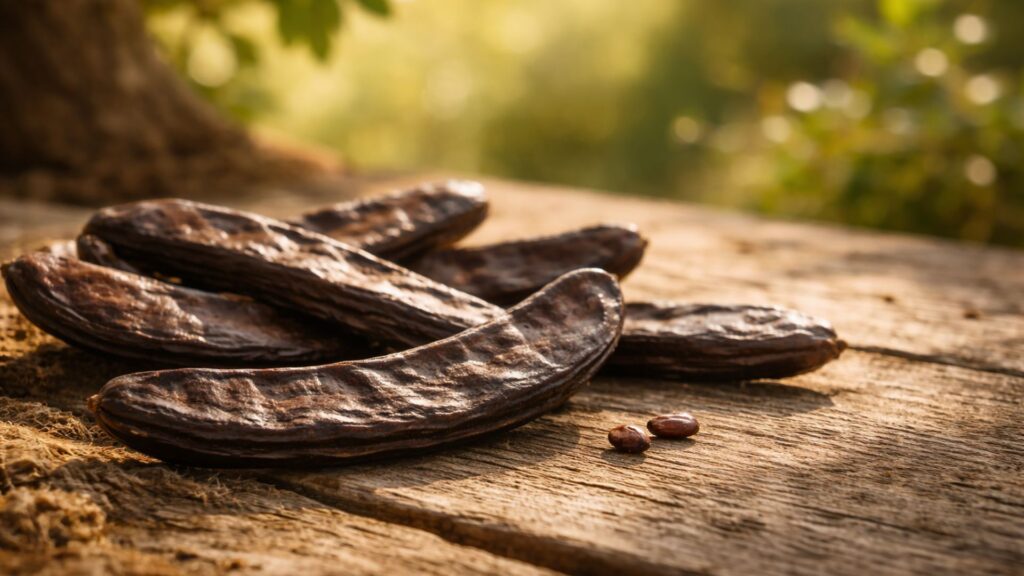
Carob is a very simple food at first glance, coming from the Ceratonia siliqua tree. But the more you use it, the more you realise how many different ways there are to enjoy it.
For a long time in the Mediterranean, carob was never something special or trendy. It was just there. People picked it, ate it, made tea from it, or used it in small everyday ways. Nothing complicated, just part of daily life.
If you want to understand more about what carob actually is, you can read our detailed guide here.
That is exactly what makes carob interesting again today. It is natural, it does not need much processing, and you can use it in different ways depending on what you feel like.
In this guide, I will show you how to use carob in a simple and practical way.
- Just real ways that actually fit into everyday life
- No complicated recipes
- No unnecessary steps
Why Carob Is So Versatile
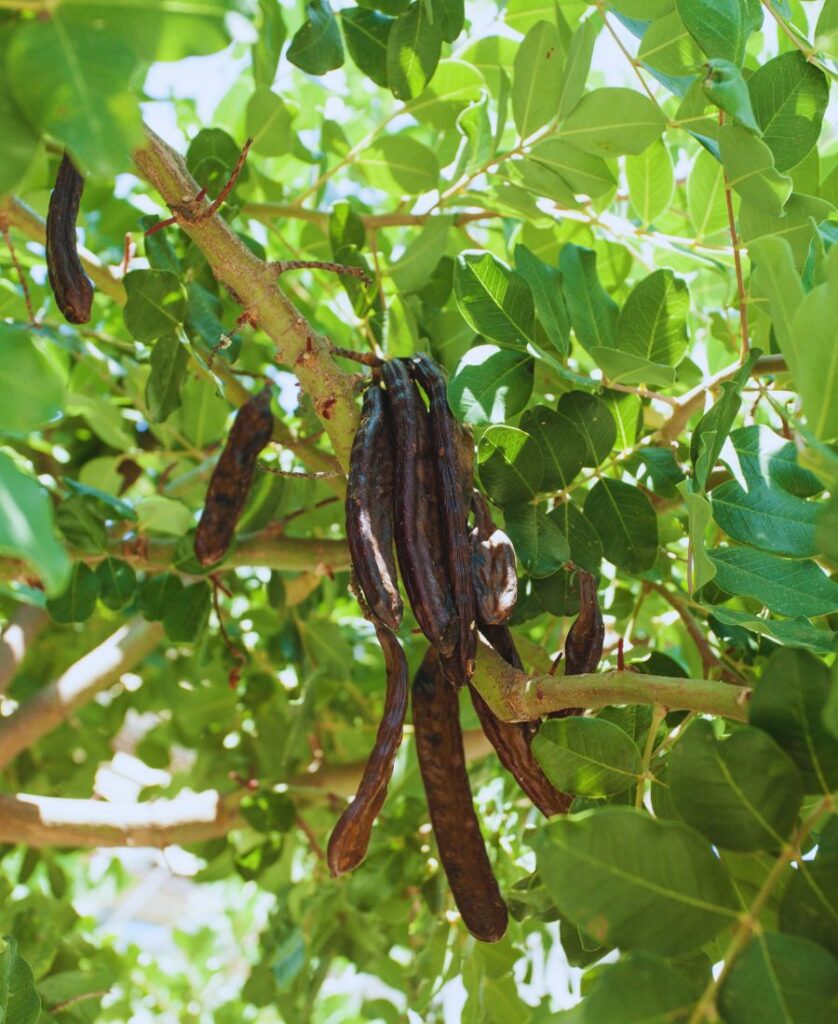
Carob is one of those foods that already works in its natural form. You do not need to do much with it before you can use it.
Natural sweetness and mild flavor
Carob has its own natural sweetness. It develops slowly while the pods ripen on the tree under the sun.
The taste is mild, slightly sweet, and a bit like caramel. It is not strong or overpowering, which makes it easy to use in different ways.
You can eat it on its own or combine it with other foods without it taking over the whole flavor.
Whole pods vs processed forms
One of the biggest advantages of carob is that you can use it as it is.
You can simply take a pod, break it, and use it directly as whole carob pods. That is something you do not often see with other foods anymore.
At the same time, you also have the option to process it further:
- grind it into powder
- use it for drinks
This gives you more flexibility, depending on how you want to use it.
Traditional uses in Mediterranean regions
In southern regions like Portugal, Spain, or Greece, carob has been used for generations.
It was never seen as something fancy. People used it because it was available, reliable, and easy to work with.
- eaten as a simple snack
- used for basic drinks
- prepared in small ways at home
That traditional approach still makes the most sense today.
Carob is not something complicated. It is something you can use in a very simple and natural way.
How to Eat Carob Pods Naturally
The most direct way to use carob is also the simplest one. You can eat the pods just as they are, without any preparation.
That is how it has been done for a long time.
- No processing
- No extra steps
- Just a natural snack straight from the tree
Eating carob pods raw
Carob pods can be eaten on their own, just like a natural snack.
All you need to do is:
- take a pod
- break it into smaller pieces
- chew it slowly
As you chew, the natural sweetness begins to develop.
It is not something you rush. Carob is best enjoyed slowly, almost like dried fruit. The longer you chew, the more flavor you get.
This makes it a very simple and practical option if you want something natural to snack on without adding anything.
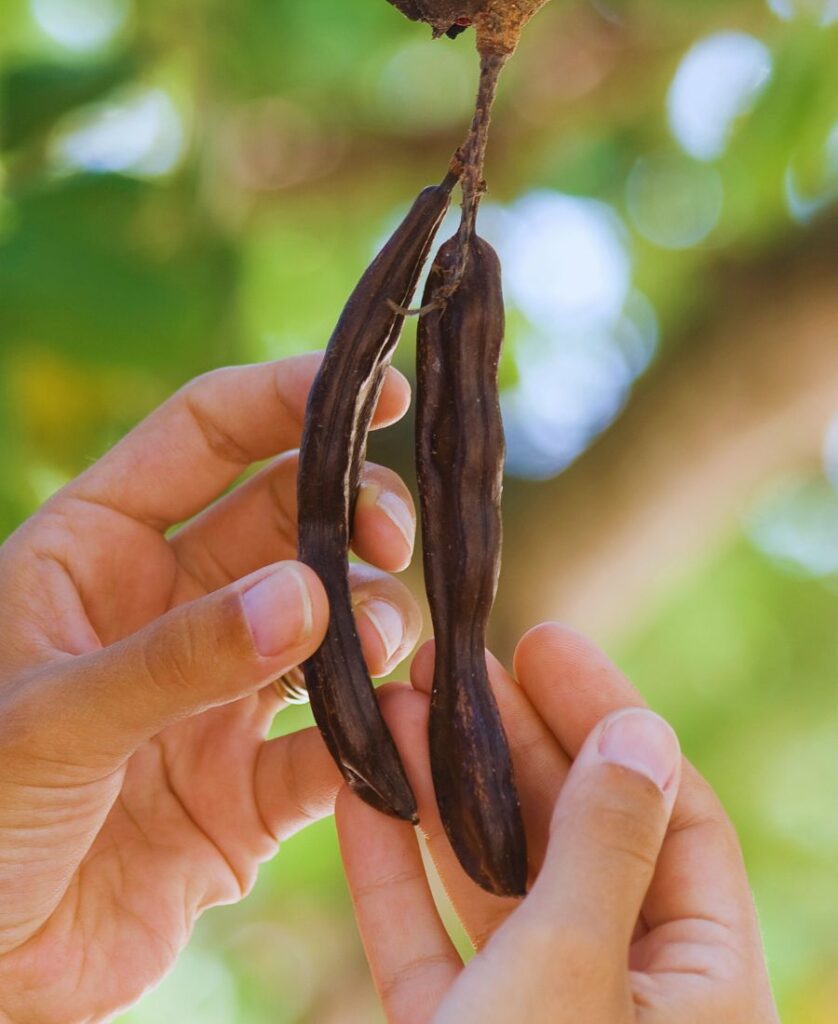
What to expect when chewing carob
If you have never eaten carob before, the texture might surprise you at first.
The pods are quite firm and slightly tough. They are not soft like dried fruit, which means you do not bite through them quickly, but rather chew them slowly.
As you chew, the sweetness begins to develop more and more. It is a mild, slightly caramel-like flavor that becomes stronger over time.
Because of the texture, carob naturally slows you down while eating. That is part of the experience.
Removing seeds and texture tips
Inside the pods, you will find hard seeds.
- These are not meant to be eaten
- They are very tough and should be removed
The easiest way is to chew around them and take them out of your mouth.
If you prefer, you can also prepare the pods beforehand:
- break them into smaller pieces
- remove some of the seeds in advance
Another simple tip is to take smaller bites and eat slowly. This makes it more enjoyable and easier to handle.
Making Carob Tea or Infusion

Another very simple way to use carob is to turn it into a warm drink.
Carob tea has been used for a long time in different regions. It is easy to prepare and brings out a different side of the pods.
Instead of chewing, you slowly extract the flavor into water.
How to prepare carob tea
To make carob tea, you only need:
- a few pieces of carob pod
- water
Start by breaking the pods into smaller chunks so more surface is exposed.
Then:
- place them in a pot with water
- bring it to a gentle boil
- let it simmer for about 10 to 15 minutes
The water will slowly take on the color and flavor of the carob.
Once it is ready, strain out the pieces and drink it warm.
It has a naturally mild sweetness, so in most cases you do not need to add anything.
Using whole pods vs pieces
You can use whole pods, but breaking them into pieces works much better.
Smaller pieces:
- release more flavor
- make the process more efficient
If you leave the pods whole, the tea will be lighter and take longer to develop.
For a stronger and more balanced result, it is best to break them first.
Flavor and variations
Carob tea has a soft, slightly sweet taste. It is not strong or bitter.
If you want to adjust it, you can combine it with other ingredients:
- cinnamon
- a bit of ginger
Some people prefer to drink it pure to keep it as natural as possible.
You can also experiment with:
- the amount of carob
- the cooking time
Less carob gives a lighter tea, while more carob makes it deeper and richer.
How to Make Carob Powder at Home
If you want to make your own carob powder, it is important to understand one key point first.
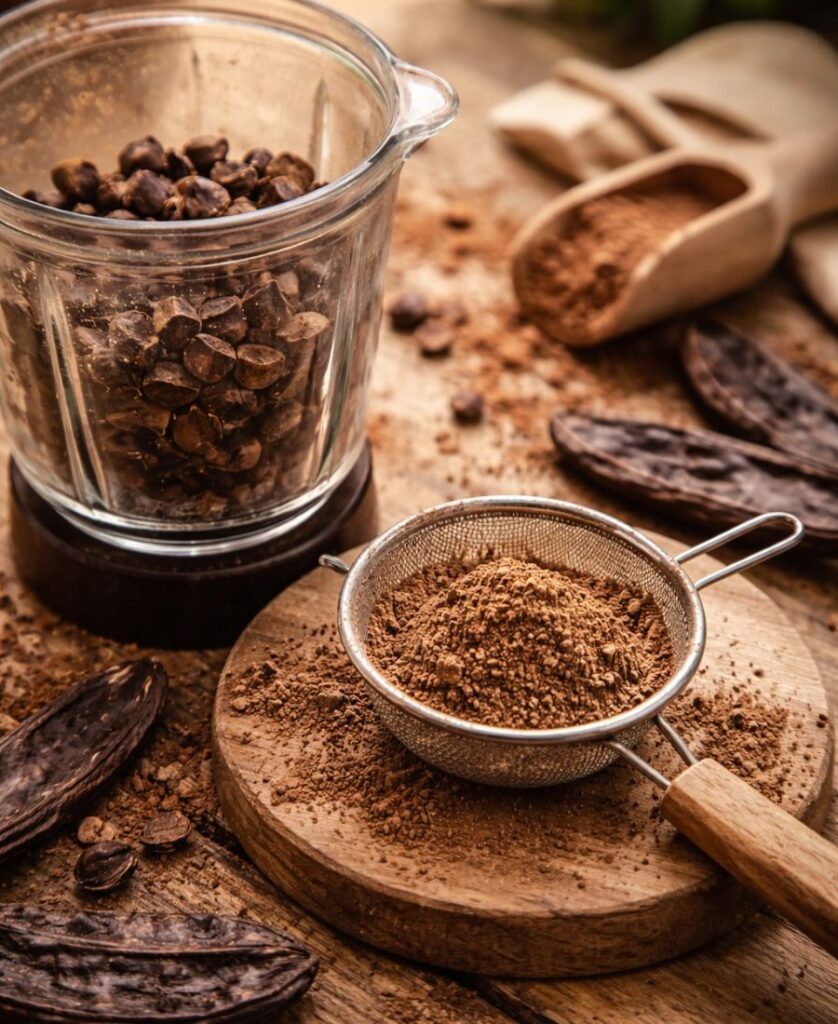
Carob pods contain very hard seeds. These are not suitable for grinding in a normal kitchen blender and should always be removed before making powder.
Once the seeds are removed, the rest of the pod can be processed into a fine, natural powder.
Breaking the pods and removing the seeds
There are two simple ways to prepare carob pods before grinding.
Option 1: Using fully dried pods
You can work with fully dried pods and break them into pieces. From there, you remove the seeds manually.
- simple method
- no soaking needed
- but requires more effort
Because the pods are very hard, this can take some time and strength.
Option 2: Soaking the pods first
You place the pods in water for a few hours until they become slightly softer.
After that:
- cut them open lengthwise
- remove the seeds much more easily
Once the seeds are removed, the pods need to be dried again.
You can either:
- let them air dry
- or place them in the oven at a low temperature
Around 80 degrees for 10 to 20 minutes is enough. The goal is simply to remove the moisture so they can be ground properly.
Grinding into powder
After drying, break the pods into smaller pieces.
A strong kitchen blender or grinder is enough for this step. You do not need any special equipment, but it should be powerful enough to handle the dried pieces.
Blend the carob until you get a fine texture. This may take a bit of time depending on your device.
Sifting for a fine result
To get a smoother powder, it helps to use a sieve.
- pass the powder through a sieve
- separate larger pieces from finer particles
- grind the coarse parts again if needed
This step makes a big difference, especially if you want to use the powder for drinks or recipes.
When homemade powder makes sense
Making your own carob powder is not just about doing it yourself. It is also about the quality of what you are using.
Most carob powder on the market is produced in large quantities. The pods are collected in bulk and often include a mix of everything:
- good pods
- older ones
- broken pieces
- sometimes lower quality material
Everything gets processed together.
This is efficient, but it also means you have very little control over the final quality.
When you use whole pods yourself, it is different.
You can choose clean, well-selected pods and work only with what you trust. This alone already makes a noticeable difference. The result is often a cleaner and more balanced flavor.
It also gives you full control:
- how the pods are prepared
- how fine the powder is
- how fresh it is when you use it
At the same time, it is not always necessary to make your own powder. It takes a bit of time and effort.
For many people, using the pods directly or making tea is already enough.
But if you want the best possible quality and a more hands-on approach, making your own powder is definitely worth it.
Using Carob in Simple Recipes and Drinks
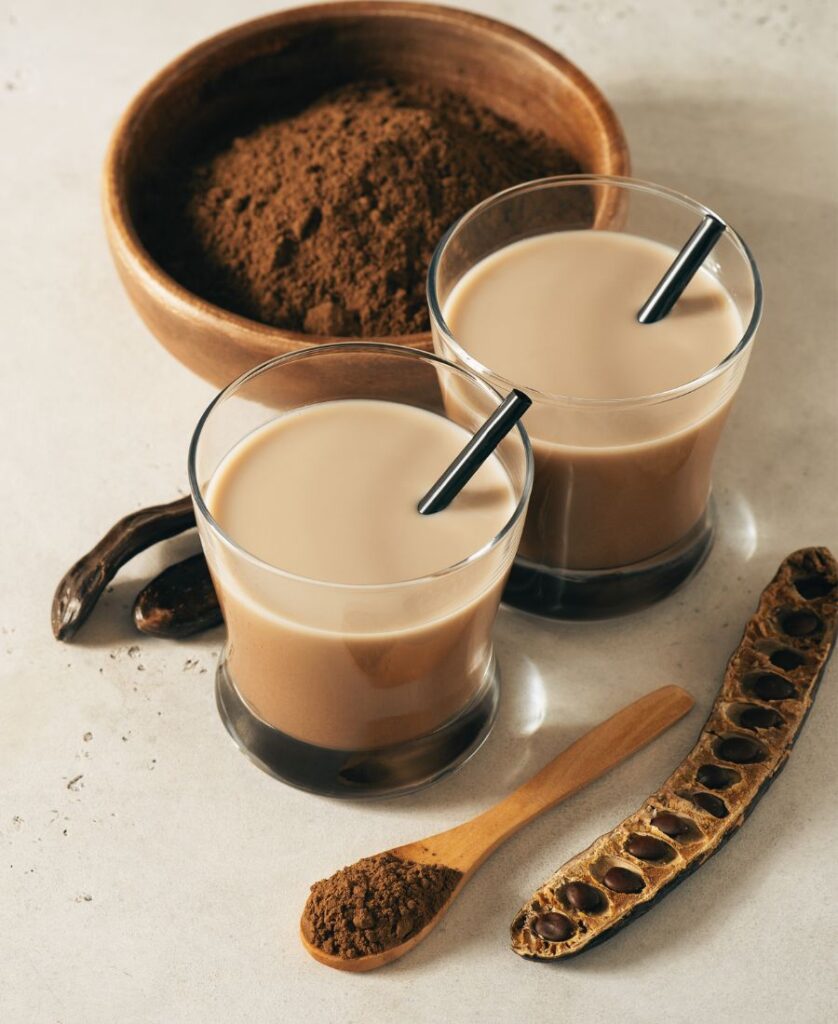
Carob can also be used in very simple recipes. You do not need anything complicated to start using it in everyday food.
Because of its natural sweetness, it works well in different situations without needing much adjustment.
Carob as a cocoa alternative
Carob is often used as an alternative to cocoa.
It has a mild, slightly sweet taste and does not have the bitterness that cocoa can have. This makes it easier to use without adding extra sugar.
You can use carob powder in the same way you would use cocoa in simple recipes:
- baking
- warm drinks
It will not taste exactly the same, but it has its own character that works well in many situations.
Adding carob to drinks
Carob powder can be added to different drinks.
You can mix it into:
- warm milk alternatives
- or simply hot water
It dissolves easily and creates a mild, naturally sweet drink.
It also works well in smoothies. Combined with fruits or yogurt, it adds a soft sweetness without overpowering the other ingredients.
Baking with carob
Carob can also be used in baking.
You can:
- replace cocoa in simple recipes
- or add it as an extra ingredient
It works especially well in:
- cakes
- muffins
- energy bars
Because it is naturally sweet, you often need less added sugar.
As with everything, it is best to start simple and adjust based on what you like.
Everyday Ways to Use Carob
You do not always need to prepare carob in a special way.
In many cases, the simplest way is already the best. Carob pods can easily become part of your everyday routine without any extra effort.
As a natural snack
One of the easiest ways to use carob is simply as a natural snack.
You can take a pod with you and eat it whenever you feel like it.
- no preparation
- no added ingredients
- just something natural on its own
Because of its firm texture, it is not something you eat quickly. It takes a bit of time, which makes it feel more satisfying than many other snacks.
With nuts and dried fruits
Carob also works well together with other simple foods.
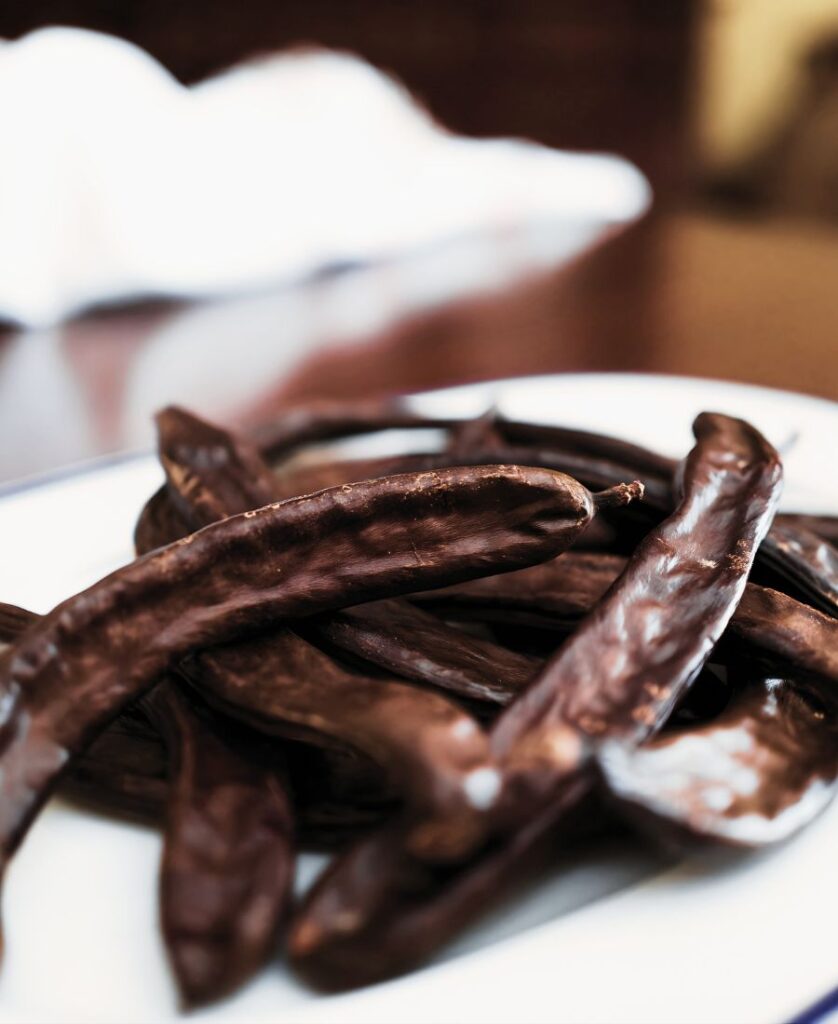
You can combine carob with nuts or dried fruits to create a small, natural snack mix.
The mild sweetness of carob fits well with the more neutral taste of nuts. It is an easy way to add variety without needing to prepare anything complicated.
On the go
Carob pods are very practical when you are out and about.
- no cooling needed
- no mess
- easy to carry
You can keep a few pieces with you and have something ready whenever you need it.
That makes them a simple and natural alternative to processed snacks.
Carob Pods vs Carob Powder: What’s the Difference?
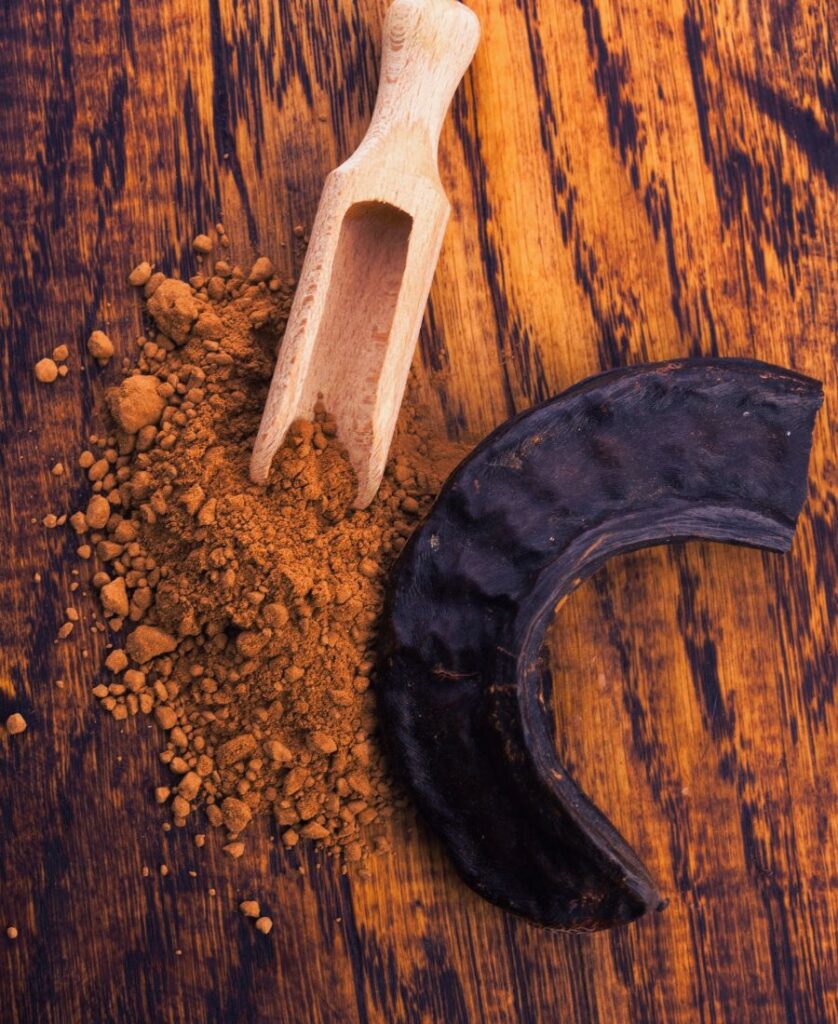
Carob can be used in different forms, but the two most common are whole pods and powder.
Both have their place, but they are not the same. Understanding the difference helps you decide what works best for you.
Natural vs processed
Carob pods are the most natural form.
They come exactly as they grow on the tree:
- nothing added
- nothing removed
- ready to use
You can use them directly without any processing.
Carob powder, on the other hand, is processed.
The pods are:
- cleaned
- seeds removed
- dried
- ground into a fine powder
This makes it more convenient, but it is no longer in its original form.
Flavor differences
The flavor is similar, but not identical.
When you eat the pods, the taste develops slowly as you chew. It is mild and changes over time.
With powder, the flavor is more immediate and even. It mixes quickly into drinks or recipes and gives a more consistent result.
When to choose each
Whole pods are ideal if you want something simple and natural.
They are perfect for:
- snacking
- making tea
- a more traditional way of using carob
Carob powder is better if you want convenience.
It is easier to use in:
- drinks
- baking
- quick recipes where you need a smooth texture
In the end, it depends on how you want to use carob in your daily routine.
If you want to use carob in its most natural form, whole pods are often the better choice.
Common Mistakes When Using Carob
Carob is simple to use, but there are a few things that can lead to wrong expectations.
If you understand these points from the beginning, it becomes much easier to enjoy it the way it is meant to be used.
Expecting chocolate flavor
One of the most common mistakes is expecting carob to taste like chocolate.
Carob is often described as a cocoa alternative, but that can be misleading. It has its own taste. Mild, slightly sweet, sometimes a bit like caramel.
If you expect chocolate, you will likely be disappointed.
If you approach it as its own thing, it makes much more sense.
Using too much
Because carob is naturally sweet, you do not need a lot of it.
Using too much powder in drinks or recipes can make the flavor too heavy. It is better to start with a small amount and adjust slowly.
The same goes for tea. A few pieces are enough to get a balanced result.
Choosing low-quality products
Quality makes a big difference with carob.
Lower quality products often come from mixed batches where different types of pods are processed together. This can affect both flavor and consistency.
If you use well-selected pods, the result is usually much cleaner and more balanced.
Final Thoughts: How to Use Carob in Everyday Life
Carob is not something complicated.
It is one of those foods that fits naturally into everyday life without needing much effort. You can eat it as it is, make a simple tea, or turn it into powder if you want more options.
There is no single right way to use it. It depends on what you prefer and how you like to keep things.
For some, it is just a natural snack. For others, it becomes part of a daily routine. And for some, it is something to experiment with in the kitchen.
What makes carob special is exactly that. It gives you flexibility without forcing you into a specific way of using it.
In the end, the best approach is to keep it simple and start with what feels natural.
That is how carob has always been used. And that is still the best way to use it today.


