

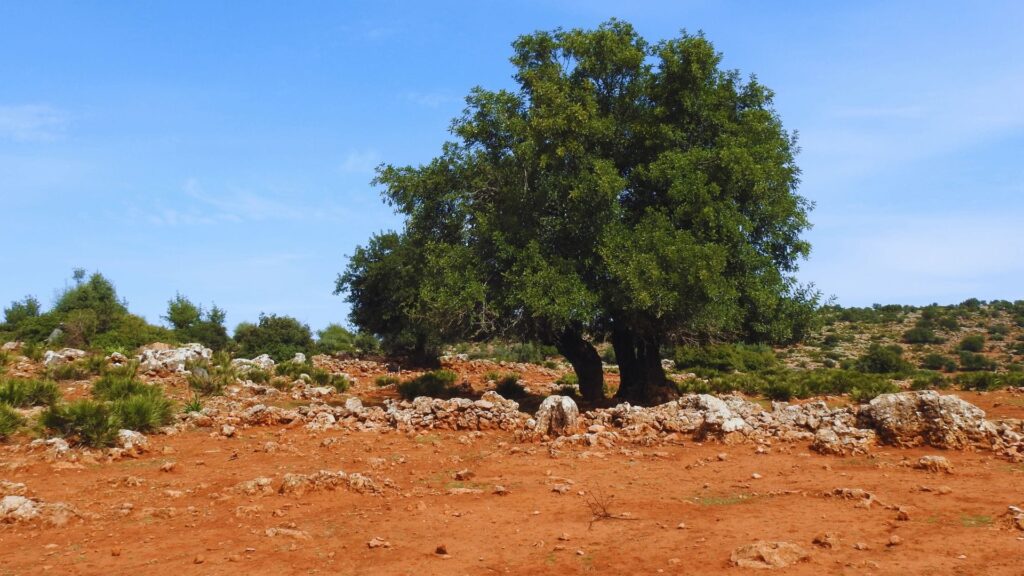
What is carob, and why has this Mediterranean ingredient been quietly used for centuries while chocolate dominated the spotlight?
Carob comes from the pods of the Ceratonia siliqua tree, an evergreen species native to the Mediterranean region. Its dark pods contain a naturally sweet pulp with no caffeine, making carob a distinctive ingredient that has been part of traditional diets for centuries, and one that is also explored as an alternative to cocoa.
What Is Carob?
Carob is the naturally sweet fruit of the Ceratonia siliqua tree, an evergreen species that has grown in the Mediterranean region for thousands of years. Unlike cocoa, which comes from fermented and roasted cacao beans, carob develops in long, dark brown pods that grow directly on the tree.
The carob tree thrives in warm, dry climates and is especially well adapted to coastal regions such as Southern Portugal, Spain, Italy, Greece, and parts of North Africa. Once mature, the tree produces thick pods that gradually turn from green to deep brown as they ripen under the sun.
Inside each pod, you’ll find:
- A naturally sweet pulp
- Hard, glossy seeds
Traditionally, the pulp is dried and either ground into powder or used whole. The seeds were historically valued for their remarkably consistent weight, a property that even influenced the origin of the word “carat.”
Unlike cocoa, carob does not require fermentation to develop flavor. Its sweetness forms naturally as the pod matures and dries. Because of this, carob has a smooth, mild taste with subtle caramel-like notes rather than the bitterness often associated with dark chocolate.
Today, carob is commonly used in powdered form as a caffeine-free alternative to cocoa. However, whole carob pods are equally valued for their traditional and natural form. In Mediterranean regions, they have long been part of local food culture, rural agriculture, and seasonal harvest traditions.
Carob is not a modern trend ingredient. It is a deeply rooted Mediterranean crop that has quietly existed alongside olives, almonds, and figs for generations.
The Carob Tree (Ceratonia siliqua)
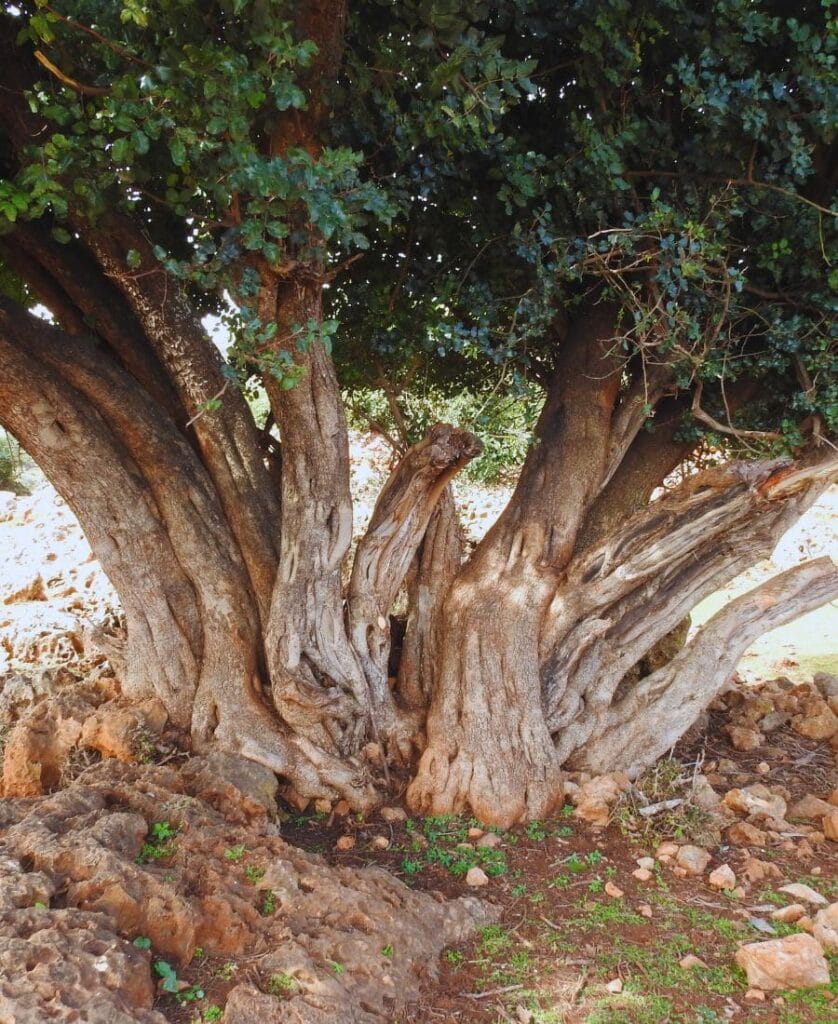
The carob tree, known botanically as Ceratonia siliqua, is an evergreen species native to the Mediterranean basin. It has grown for centuries across Southern Europe, North Africa, and parts of the Middle East — thriving in dry, sun-exposed landscapes where other crops would struggle.
Unlike many fruit trees, the carob tree requires very little water once established. It is naturally adapted to:
- long, hot summers
- mild winters
- low-rainfall environments
Regions like the Algarve in Southern Portugal provide an ideal climate. Mature trees are rarely irrigated; instead, they rely on deep root systems that draw moisture from the soil year-round.
One of the most remarkable features of the carob tree is its longevity.
These trees are known to live for several hundred years, and in some Mediterranean regions, specimens are believed to be close to a thousand years old. Even today, it is common to find carob trees that are 200 to 300 years old, with massive trunks that can reach impressive diameters.
Some ancient trees develop thick, sculptural forms, shaped by wind, sun, and time.
Carob trees grow slowly but steadily. Over decades, they form broad canopies that provide natural shade while continuing to produce pods each year. Their resilience is one of the reasons they have remained part of traditional Mediterranean agriculture for generations.
The flowering cycle begins in late summer or early autumn. Small, subtle blossoms develop directly from the branches, eventually forming the long green pods that mature and darken over the following months. By late summer of the next year, the pods are fully ripened and ready for harvest.
In landscapes like the Algarve, carob trees are not industrial plantation crops. They are often part of mixed rural ecosystems, growing alongside olives, almonds, and fig trees. Their presence reflects a long agricultural heritage rooted in sustainability and adaptation to the climate.
What Are Carob Pods?
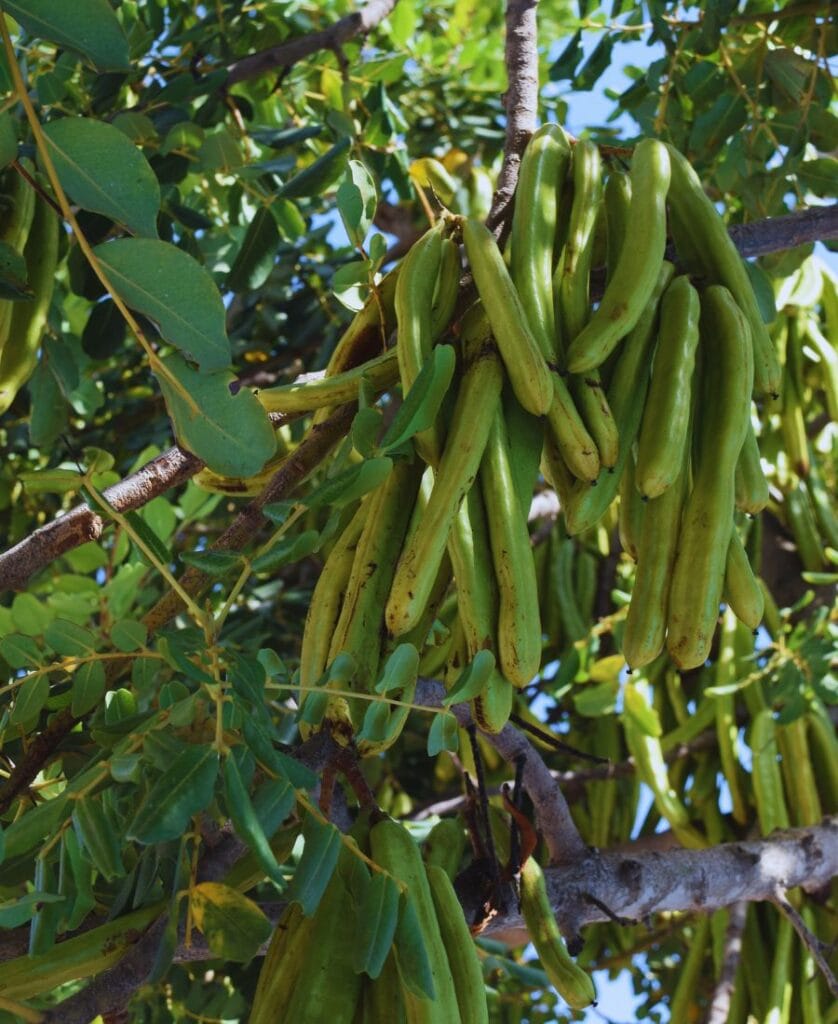
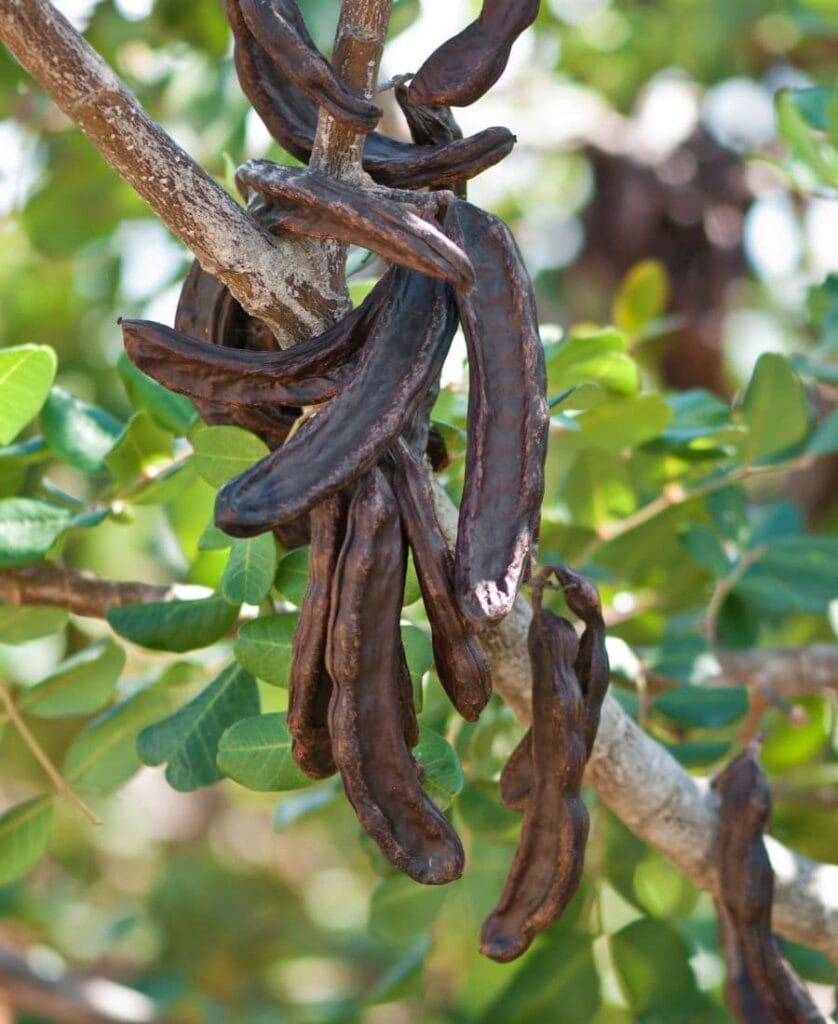
Carob pods are the fruit of the carob tree. They grow directly from the branches and trunk, gradually developing into long, firm pods that change color as they mature, from bright green to deep brown.
Each pod contains two main components:
- pulp
- several hard, glossy seeds
The pulp makes up most of the pod and is the part traditionally used for food. As the pods ripen and dry under the sun, their natural sweetness becomes more concentrated.
Unlike many fruits, carob pods are not juicy or soft when ripe. Instead, they become dry and firm, with a slightly leathery texture.
This natural drying process is one reason carob has historically been valued as a long-lasting crop in Mediterranean regions.
The sweetness of carob comes from naturally occurring sugars in the pulp. Because of this, carob does not require heavy processing to develop flavor.
Once harvested and fully dried, the pods can be:
- used whole
- ground into carob powder
- processed into syrup
- added to baking and traditional recipes
Whole carob pods are often appreciated in their most natural form, especially in rural Mediterranean areas where they have been harvested seasonally for generations.
When ground into powder, carob becomes a smooth ingredient commonly used as a cocoa alternative in drinks, desserts, and baked goods.
While carob is sometimes compared to chocolate because of its color and sweetness, it is important to remember that it comes from a completely different plant and fruit structure.
Carob pods are not beans, and they do not undergo fermentation in the way cocoa does.
How Carob Differs from Cocoa Beans
Although carob and cocoa are often compared, they originate from entirely different plants and follow distinct agricultural paths.
Carob comes from the pods of the Mediterranean Ceratonia siliqua tree. These pods ripen directly on the tree and are harvested once fully matured and dried.
Cocoa, by contrast, comes from the seeds of the tropical cacao tree (Theobroma cacao). After harvest, the seeds are fermented, dried, roasted, and processed to develop chocolate’s characteristic flavor.
The fundamental difference lies in plant structure and processing. Carob is a fruit pod that develops sweetness naturally as it matures, while cocoa comes from fermented seeds that require multiple processing stages.
Carob Nutrition Explained
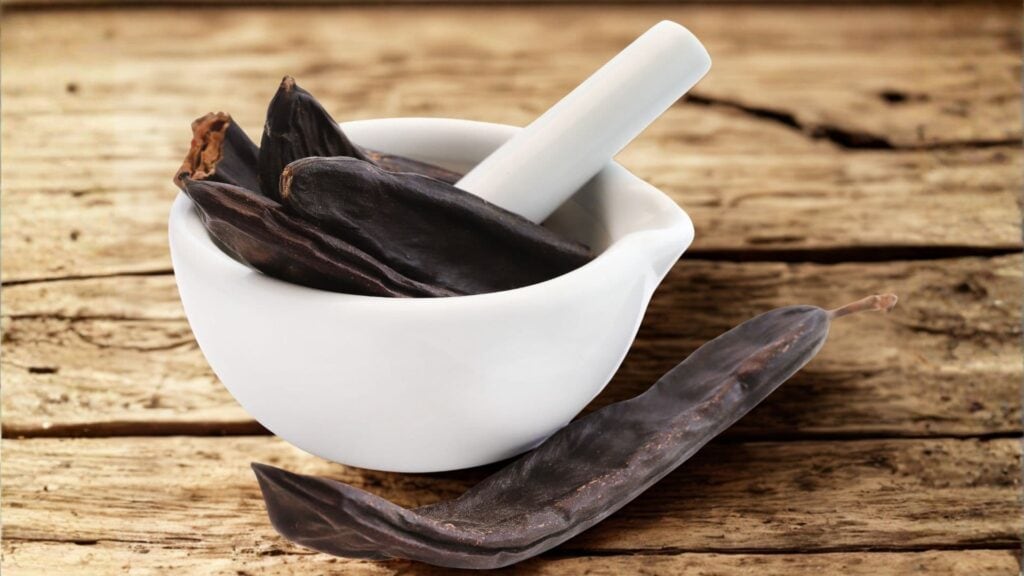
To understand what carob truly is, it helps to look at its nutritional composition. Beyond its mild sweetness and traditional use in Mediterranean regions, carob has a distinct nutritional profile that sets it apart from cocoa and many other ingredients.
Carob is naturally low in fat and contains dietary fiber, along with a range of minerals commonly found in plant based foods. Its composition reflects its origin as a fruit pod that matures and dries naturally on the tree. This structure influences its carbohydrate profile and fiber content.
This natural composition is one reason carob has remained a valued crop in dry Mediterranean climates for centuries.
Rather than being viewed as a substitute for chocolate, carob can be understood as its own ingredient, with its own nutritional characteristics.
In the following sections, we take a closer look at:
- its macronutrient profile
- its mineral content
- what makes it different from cocoa from a nutritional perspective
Macronutrient Profile
Carob has a macronutrient composition that differs noticeably from cocoa. One of its most distinctive characteristics is its low fat content. While cocoa naturally contains a significant amount of fat due to cocoa butter, carob contains only minimal amounts.
The primary macronutrient in carob is carbohydrates. These carbohydrates come from naturally occurring sugars that develop as the pod ripens on the tree.
In addition, carob contains dietary fiber, which contributes to its dense texture and influences how the carbohydrates are absorbed. Unlike refined sugar, the sweetness in carob is part of the whole fruit structure, rather than an isolated ingredient.
This natural sweetness is one reason carob can be used in recipes with less added sugar compared to cocoa based alternatives.
Carob is also a source of dietary fiber. Fiber plays a structural role in plant foods and contributes to the overall texture of carob powder and whole pod products. The fiber content helps explain why carob has a dense, slightly grainy consistency when ground.
Protein is present in smaller amounts, which is typical for fruit based plant ingredients.
Overall, the macronutrient profile of carob reflects its origin as a sun ripened pod, rather than a seed rich in fat like cocoa beans.
Understanding this basic composition helps clarify why carob behaves differently in baking and cooking. It is:
- characterized by a different texture compared to cocoa
- naturally sweeter
- lower in fat
Minerals Found in Carob
In addition to its macronutrient profile, carob contains a range of naturally occurring minerals. As a tree grown in dry Mediterranean soils, the carob pod absorbs nutrients through deep root systems that extend far into the ground.
Among the minerals commonly found in carob are:
- calcium
- potassium
- magnesium
The exact composition can vary depending on soil conditions, climate, and harvesting methods, but these minerals are typically present in moderate amounts.
Calcium is often associated with plant based ingredients such as leafy greens and seeds, yet carob also contains measurable levels of this mineral. Potassium is widely found in fruits and plays a role in general plant structure. Magnesium is another mineral naturally present in many whole plant foods, including carob.
It is important to understand that carob is not consumed as a concentrated mineral supplement. Rather, its mineral content contributes to its overall nutritional profile as a whole food ingredient.
When used in baking or beverages, carob brings not only flavor and color, but also the naturally occurring components of the pod itself.
Because carob is typically consumed in its minimally processed form, especially as whole pods or simple powder, its mineral composition reflects the characteristics of the original fruit.
In addition to its mineral content, carob also contains small amounts of naturally occurring B vitamins, as found in many whole plant foods. While carob is not regarded as a primary source of vitamins, these components form part of its overall nutritional composition as a whole fruit ingredient.
Does Carob Contain Caffeine?
Carob does not contain caffeine. Unlike cocoa, which naturally includes both caffeine and theobromine, carob pods are free from stimulant compounds.
Cocoa beans contain these naturally occurring stimulants as part of the cacao plant’s chemical composition. Carob, however, develops its flavor without the need for fermentation or chemical stimulation. Its mild sweetness comes directly from the ripened pod.
Because carob is naturally caffeine free, it is sometimes chosen by people who prefer to avoid stimulants in their diet. This includes:
- those who are sensitive to caffeine
- those who prefer non stimulating ingredients
- those seeking an alternative to cocoa based products
It is important to understand that carob is not processed to remove caffeine. It simply does not contain it in the first place.
This distinction explains why carob is often described as a caffeine free cocoa alternative.
In recipes, carob powder can be used in similar ways to cocoa powder, but without contributing caffeine to the final product.
Because carob contains no natural stimulants, it can be an appealing choice in evening beverages or for caffeine-sensitive individuals, offering a gentle alternative to cocoa-based products later in the day.
Carob vs Cocoa – What’s the Difference?
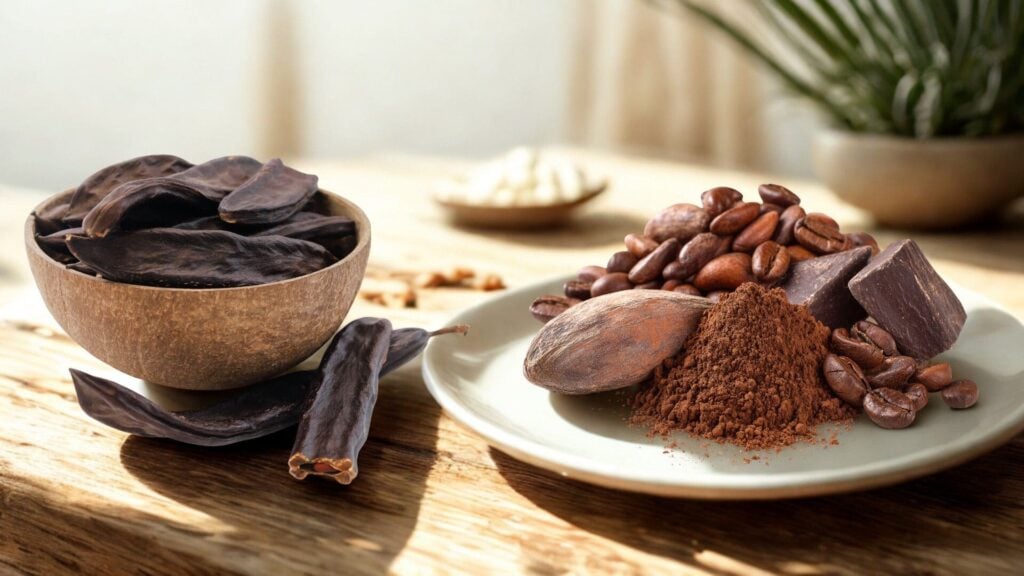
Carob and cocoa are often compared because they are used in similar culinary contexts. However, their differences are fundamental.
- Plant Origin
Carob comes from the pods of the Mediterranean carob tree, while cocoa comes from the seeds of the tropical cacao tree. - Processing
Carob pods are dried and ground. Cocoa beans require fermentation and roasting before they develop chocolate flavor. - Flavor Profile
Cocoa tends to be more intense and naturally bitter. Carob offers a milder, naturally sweet taste with subtle roasted notes. - Stimulants
Cocoa contains caffeine and theobromine. Carob does not contain stimulant compounds.
The comparison is not about superiority, but about understanding that these are two distinct plant ingredients with different agricultural traditions, compositions, and culinary roles.
Taste Comparison
One of the most noticeable differences between carob and cocoa lies in their taste.
Cocoa is naturally bitter. Its deep, intense flavor develops through fermentation and roasting of the cacao beans. Depending on how it is processed, cocoa can range from slightly sharp to rich and strongly aromatic. In many chocolate products, sugar is added to balance this natural bitterness.
While cocoa’s flavor profile is shaped by fermentation and roasting, carob’s sensory profile reflects the natural maturation of the pod. This produces a softer, rounded taste with subtle roasted and caramel notes that many find appealing in baking and warm drinks.
Due to the structural characteristics of its pulp, carob interacts differently with other ingredients than cocoa. Its profile alters recipe balance and texture in ways that reflect its botanical origin rather than simply replacing cocoa.
In practical terms:
- cocoa delivers a stronger, more dominant taste
- carob provides a softer, smoother sweetness
This distinction is one of the main reasons people experience the two ingredients differently in baking and beverages.
Understanding this contrast helps clarify why carob vs cocoa is not simply a replacement discussion. It is a comparison between two distinct taste experiences.
How Carob and Cocoa Are Processed
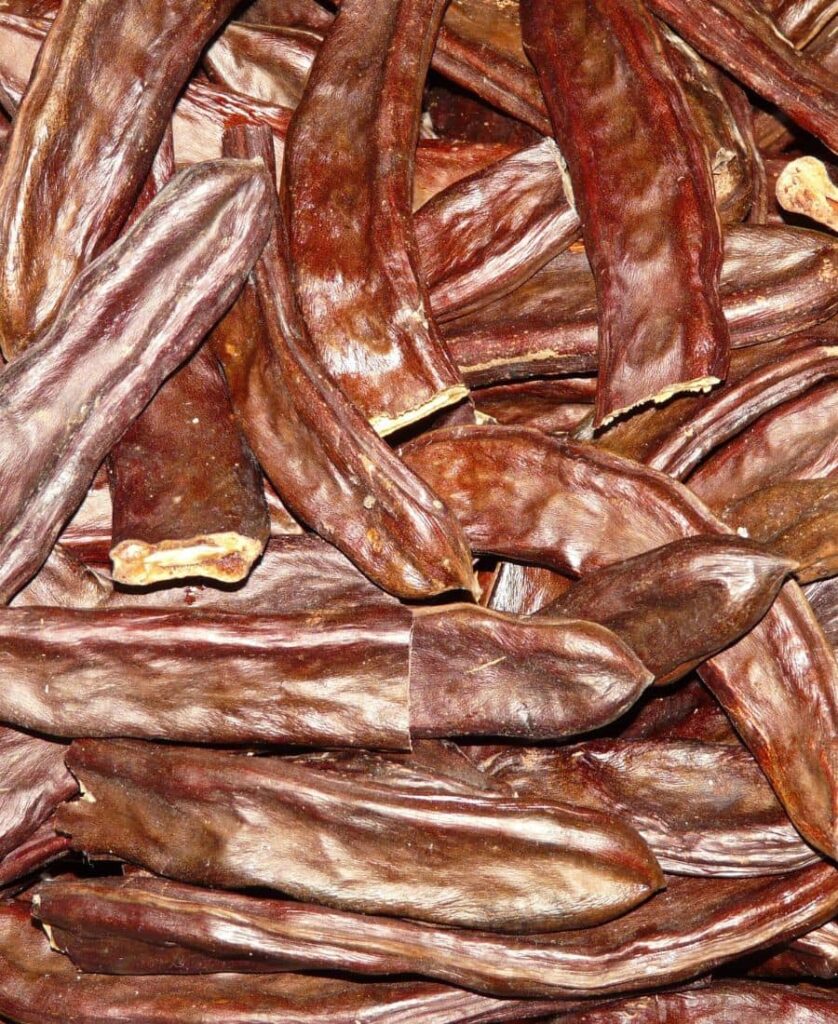
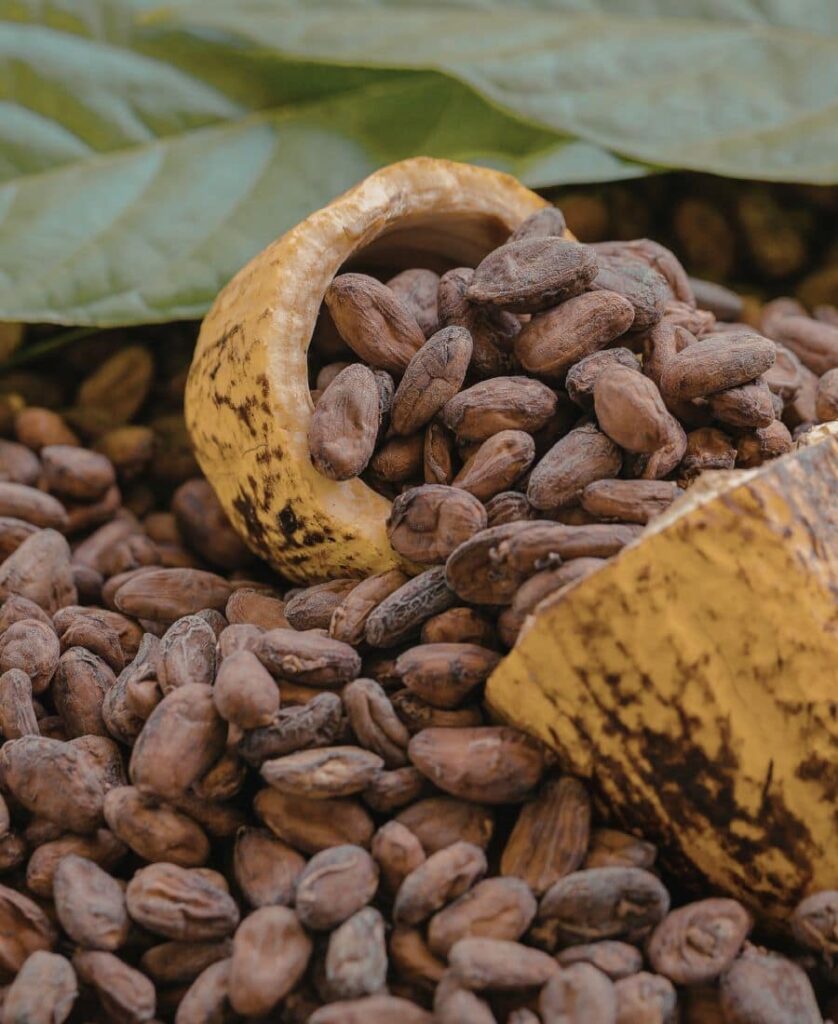
The journey from tree to powder differs significantly between carob and cocoa.
Carob pods are harvested once they have fully ripened and darkened on the tree. After harvest, the pods are typically dried, either naturally in the sun or in controlled drying conditions. Once dried, they can be lightly roasted to deepen their flavor. The pods are then ground into powder or processed further, depending on their intended use.
In simplified form, carob processing involves:
- harvesting fully ripened pods
- drying
- optional light roasting
- grinding into powder
Cocoa follows a more complex path. After cacao pods are harvested, the seeds are removed and fermented. This fermentation stage is essential for developing the characteristic chocolate flavor. The beans are then:
- dried
- roasted
- ground into cocoa mass
From this mass, cocoa powder and cocoa butter can later be separated.
One of the key differences is that carob does not require fermentation. Its sweetness develops naturally as the pod matures and dries. Cocoa, by contrast, relies heavily on fermentation and roasting to transform its naturally bitter seeds into the familiar taste of chocolate.
Processing also affects texture. Carob powder tends to be smooth and slightly dense, with a naturally sweet profile. Cocoa powder can range from light and dry to rich and intense, depending on how much cocoa butter remains in the final product.
These different processing methods reflect the distinct agricultural traditions behind each ingredient. Carob processing is generally simpler and closer to the original fruit form, while cocoa undergoes several transformative stages before reaching its final state.
Why Some People Prefer Carob
While cocoa remains widely popular, some people choose carob for its distinct characteristics.
One reason is its naturally sweet flavor. Because carob develops sweetness as it ripens on the tree, it often requires less added sugar in recipes. This can influence the overall taste profile of baked goods and beverages.
Another factor is the absence of caffeine. Since carob does not contain caffeine or theobromine, it may be appealing to those who prefer to avoid stimulants. For some, this makes carob a comfortable choice in evening drinks or desserts.
Flavor preference also plays an important role. Carob offers a softer, milder taste, with subtle roasted and caramel notes. Those who find dark chocolate too bitter may appreciate this smoother profile.
Cultural familiarity is another reason. In parts of the Mediterranean, carob has long been part of traditional rural life. For people who grew up with carob products, it represents continuity and heritage, rather than substitution.
Ultimately, choosing carob or cocoa is less about superiority and more about:
- individual taste
- tradition
- dietary preference
Each ingredient has its own identity and culinary role.
Traditional Uses of Carob in the Mediterranean
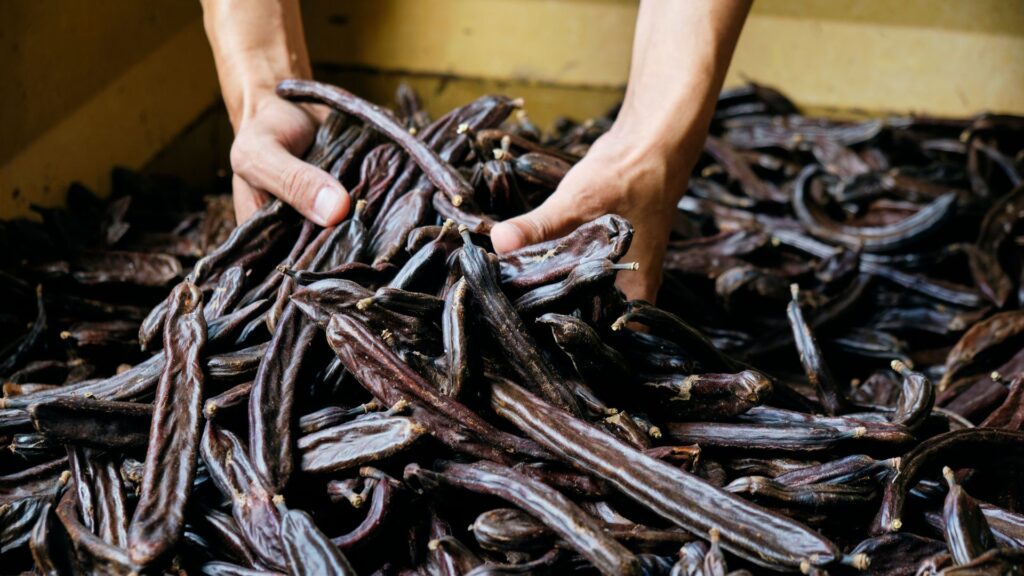
Carob has been part of Mediterranean agriculture and rural life for centuries. Long before it was discussed as a cocoa alternative, it was valued as a resilient tree crop in dry coastal regions.
Across Southern Europe, North Africa, and parts of the Middle East, carob trees grew alongside:
- olives
- almonds
- figs
The pods followed a predictable agricultural cycle, ripening in late summer and drying under natural conditions. Their long shelf stability and concentrated pulp made them well suited to regions shaped by arid climates and limited rainfall.
In traditional communities, carob was not treated as a specialty ingredient. It was part of the landscape and part of local food culture. The pods were dried naturally under the sun and stored for long periods, making them a reliable crop in climates with limited rainfall.
Over time, carob found its place in regional recipes, animal feed, syrups, and simple baked goods. Its role was shaped by climate, soil, and tradition, rather than industrial demand.
Understanding these traditional uses helps place carob in its proper context. It is not a modern trend ingredient. It is a long standing Mediterranean crop, rooted in history, adaptation, and rural sustainability.
Carob in Algarve & Southern Portugal
In Southern Portugal, particularly in the Algarve, carob trees remain a familiar presence in the landscape. Many of these trees are remarkably old, with massive trunks and broad canopies shaped by long summers and dry conditions.
Carob has historically contributed to the agricultural identity of the region. While it may not receive the same international recognition as olives or wine, it continues to represent the continuity of cultivation practices adapted to the environmental conditions of the region.
Carob in Traditional Foods
For centuries, carob has been part of Mediterranean agriculture and rural life. It grew alongside olives, almonds, and figs in dry coastal regions where few other crops thrived.
The pods were harvested seasonally, dried naturally in the sun, and stored for long periods. Their durability and natural sweetness made them a practical and reliable food source in climates with limited rainfall.
Carob was used in simple breads, syrups, rustic baked goods, and animal feed. It was not considered a specialty ingredient, but a resilient crop integrated into everyday life.an also explore Our Carob, where we explain its origin, harvest, and character in more detail.
Modern Uses of Carob
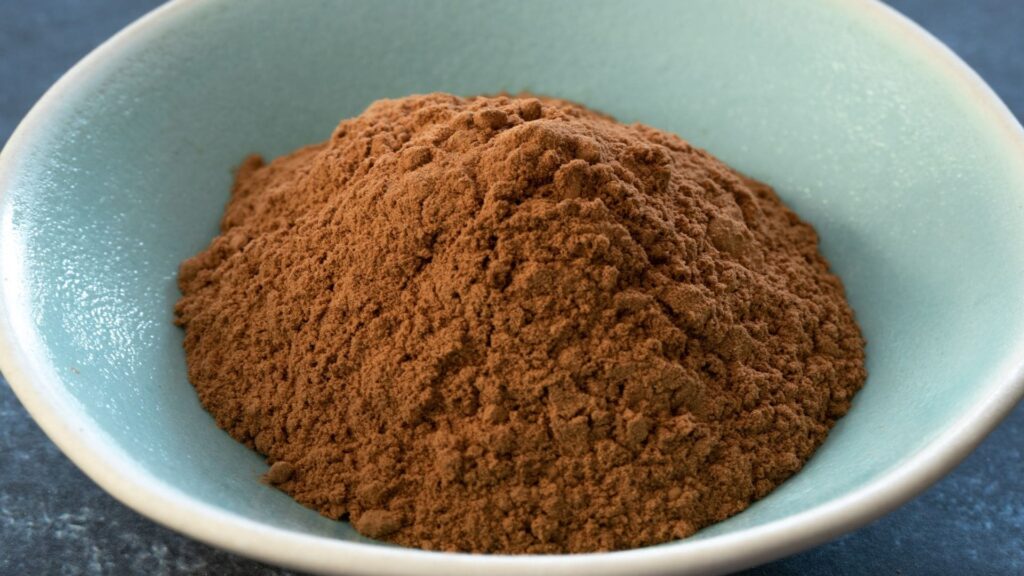
While carob has deep roots in Mediterranean tradition, it continues to find its place in modern kitchens. Today, it is used in both familiar and innovative ways, often appreciated for its natural sweetness and distinctive flavor profile.
In contemporary cooking and baking, carob is frequently explored as an alternative to cocoa. At the same time, it is also used in its own right, valued for its:
- texture
- color
- mild taste
From baked goods and warm drinks to contemporary snack products and traditional whole-pod preparations, carob spans both heritage-based and modern culinary applications. In its simplest form, whole pods can be enjoyed as they are or incorporated into rustic recipes that reflect traditional Mediterranean use.
Modern processing has made carob more accessible in different forms, including:
- powder
- syrup
- whole pods
These variations allow it to be incorporated into recipes in ways that suit different preferences and culinary styles.
Although interest in carob has grown in recent years, its modern use is less about reinvention and more about rediscovery. What was once a traditional regional ingredient is now being introduced to a broader audience through updated recipes and contemporary food culture.
For those who want to experience carob in a simple, traditional form, whole pods remain one of the most authentic ways to explore its natural sweetness and texture. You can find our available carob products in the Shop.
Carob as a Cocoa Alternative
In modern recipes, carob is often used as an alternative to cocoa. Because it can be ground into a fine powder and has a naturally dark color, it functions similarly in baking and beverages.
Carob powder can be used in:
- cakes
- cookies
- muffins
It can also be stirred into warm milk based drinks or blended into smoothies. While the flavor is not identical to chocolate, its natural sweetness and mild roasted notes allow it to play a comparable role in many preparations.
One practical difference is that carob is naturally sweet. This may influence how much additional sugar is needed in a recipe. The overall taste tends to be softer and less bitter than cocoa based versions.
Carob is also naturally caffeine free, which means that replacing cocoa with carob does not introduce stimulant compounds into the final dish. For some people, this characteristic is part of the appeal.
It is important to note that carob does not aim to replicate chocolate exactly. Rather than being a substitute in the strict sense, it offers an alternative flavor profile that works well in similar culinary contexts.
Whole Carob Pods vs Carob Powder
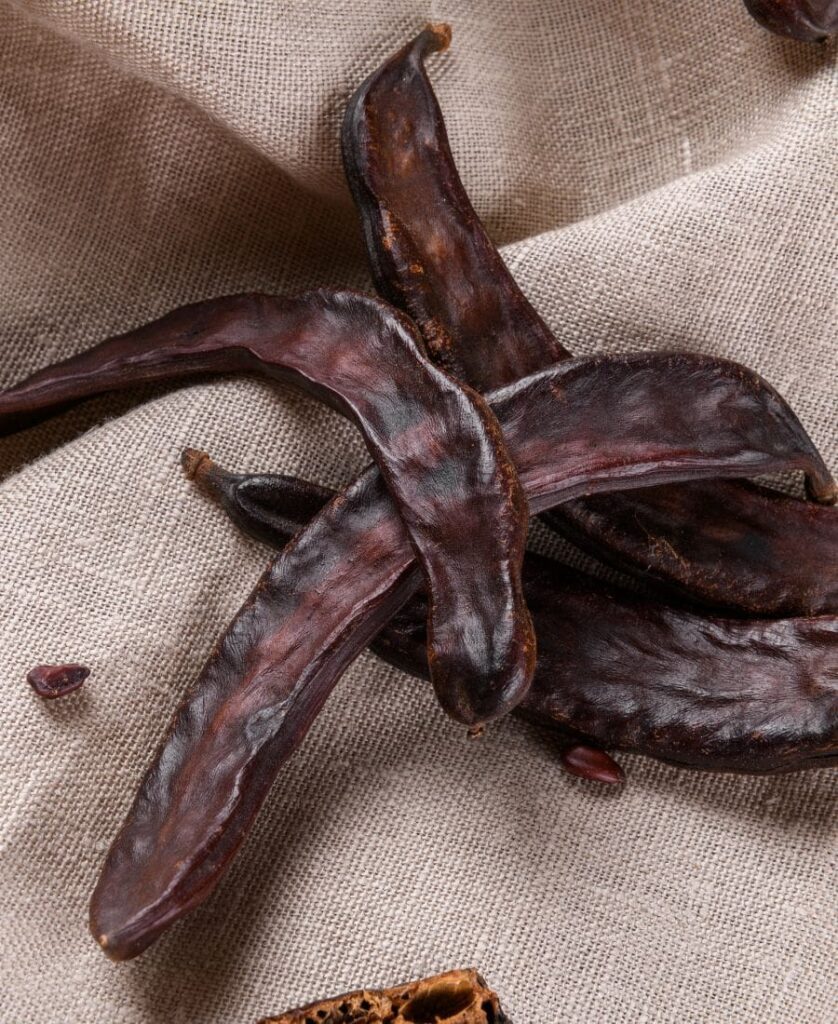
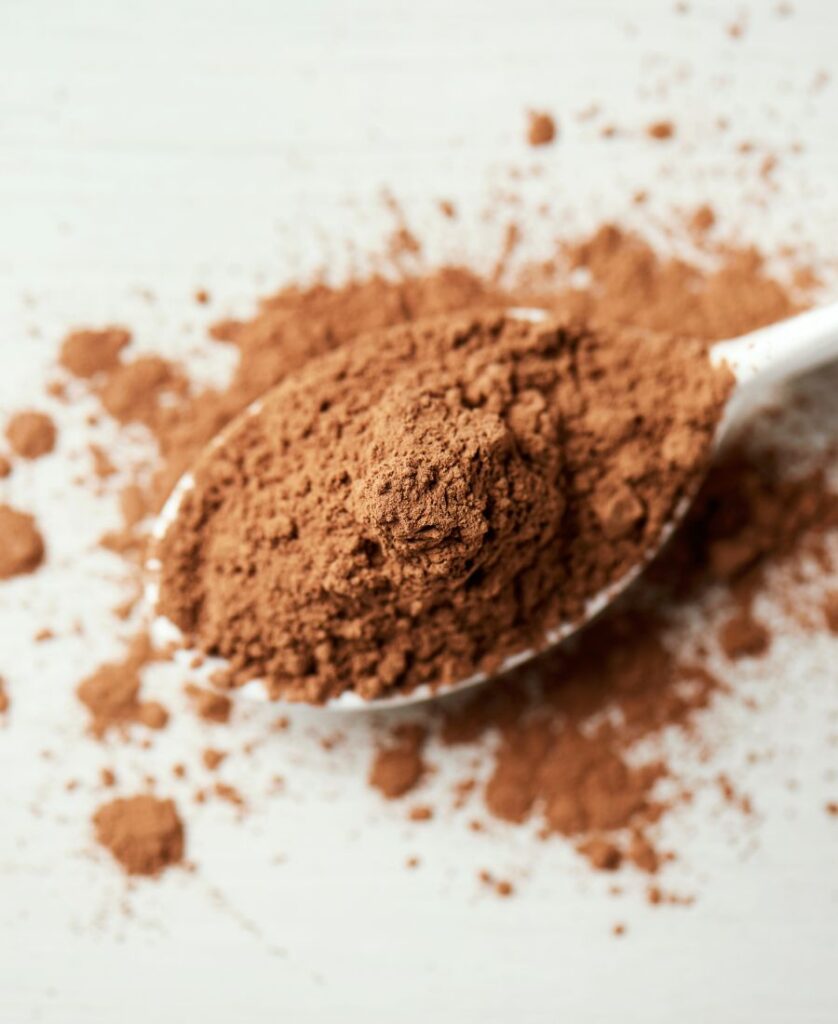
Carob is available in different forms, most commonly as whole pods or as finely ground powder. While both come from the same fruit, they offer slightly different uses and experiences.
Whole carob pods are the fruit in its natural state. After harvesting and drying, the pods remain firm and intact. They can be used for traditional preparations, infused into liquids, or ground fresh if desired.
Some people appreciate whole pods for their:
- unprocessed character
- longer shelf life
- connection to traditional use
Carob powder, on the other hand, is made by grinding dried pods into a fine consistency. This form is more convenient for baking, beverages, and recipes that require a smooth texture. It blends easily with flour, milk, or other ingredients and is often used in place of cocoa powder.
Texture is one of the main differences:
- whole pods are dense and fibrous
- carob powder is soft and uniform
While the underlying characteristics derive from the same fruit, variations in roasting and grinding can subtly modify aromatic intensity and texture.
Choosing between whole carob pods and carob powder depends largely on intended use. Whole pods connect more closely to traditional harvesting and preparation methods, while powder offers practical versatility in modern cooking.
Both forms reflect the same Mediterranean fruit, simply presented in different stages of processing.
How to Choose High-Quality Carob
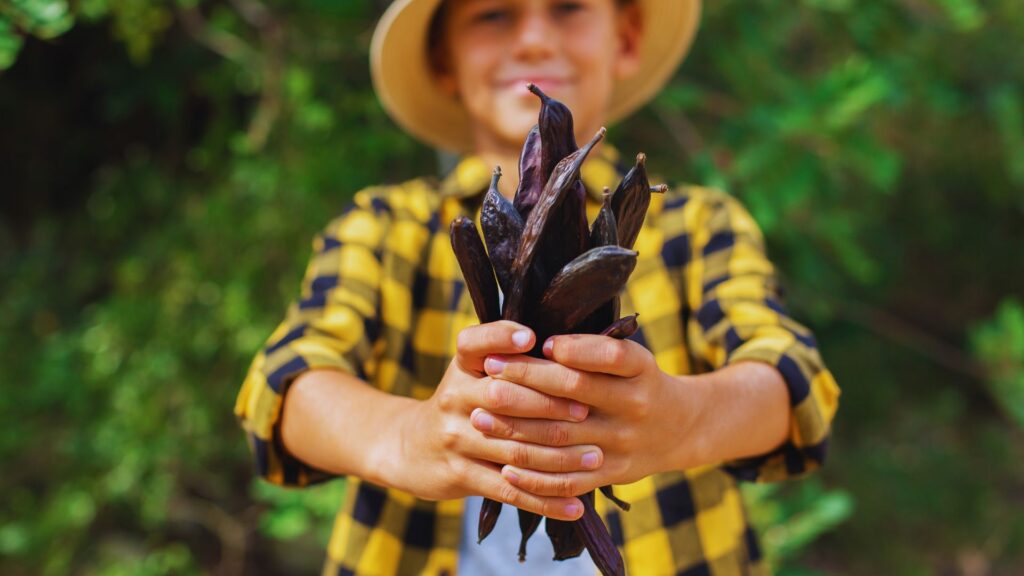
When selecting carob, quality begins with understanding its origin and handling. Because carob is a natural agricultural product, factors such as climate, harvest timing, and drying methods all influence the final result.
High quality carob should reflect:
- careful harvesting
- proper drying
- full ripening on the tree
The pods should be fully ripened before collection, allowing their natural sweetness to develop naturally. Once harvested, they need to be dried thoroughly to ensure stability and long shelf life.
The growing environment also plays a role. Carob trees that thrive in dry Mediterranean climates often produce pods with more concentrated flavor due to long sun exposure and limited rainfall.
Processing methods matter as well. Minimal handling helps preserve the original characteristics of the fruit. Whether choosing whole pods or powder, attention to sourcing and preparation can make a noticeable difference in:
- taste
- texture
- overall experience
Understanding these factors allows consumers to look beyond packaging and focus on the qualities that define well grown carob.
Whole Pods – What to Look For
When choosing whole carob pods, appearance and texture offer useful clues about quality.
Fully ripened pods should have a deep brown color. They are typically firm and dry to the touch, not soft or damp. Proper drying is essential, as excess moisture can affect shelf life and flavor stability.
The surface of the pod may appear slightly glossy or naturally matte, depending on the drying process. Minor surface variations are normal, especially in traditionally harvested carob. However, the pods should be free from:
- visible mold
- excessive cracking
- signs of improper storage
A gentle snap when breaking a pod can indicate thorough drying. Inside, the pulp should be dense and naturally sweet, surrounding the hard seeds embedded within.
Size and shape may vary, particularly when carob comes from older, non industrial trees. Variation is often a reflection of natural growing conditions, rather than a flaw.
Ultimately, high quality whole carob pods should feel:
- clean
- well dried
- consistent with natural harvesting practices
Their appearance should reflect careful handling from tree to storage.
Storage & Shelf Life
When stored properly, whole carob pods have a naturally long shelf life. Their low moisture content is one of the reasons carob has traditionally been valued as a durable Mediterranean crop.
To preserve quality, carob should be kept in a dry, cool place, away from direct sunlight and excess humidity. Good storage helps maintain the pod’s texture, flavor, and stability over time.
For best results, whole pods should be stored:
- in a well sealed container
- away from moisture
- away from strong odors
- protected from heat and direct light
If carob pods absorb moisture during storage, their texture may soften and their shelf stability can decline. Properly dried pods, by contrast, remain firm and stable for extended periods.
Carob powder should also be stored carefully. Because it has a finer texture and greater surface exposure, it should be kept in an airtight container to protect its aroma and prevent clumping.
As with many natural foods, shelf life depends on drying quality, storage conditions, and handling. When kept well, both whole pods and carob powder can remain usable for a long time while preserving their natural character.
Carob is more than a cocoa alternative. It is a fruit of the Mediterranean landscape, shaped by climate, tradition, and simple agricultural practices over generations.
If you’d like to learn more about the story behind our work, you can visit About Rustic Algarve or explore Our Carob for a closer look at how this traditional crop continues to be valued today.
A Mediterranean Crop with Lasting Relevance
Carob is not a modern invention, nor simply a substitute for another ingredient. It is a tree crop rooted in Mediterranean landscapes, shaped by climate, patience, and agricultural tradition.
From sun ripened pods to finely ground powder, carob reflects the characteristics of the land in which it grows. Its resilience, natural sweetness, and long history of practical use continue to define its place in both traditional and modern kitchens.
Understanding carob means understanding more than its flavor. It means recognizing a crop that has endured for centuries, adapting to dry soils and long summers while remaining part of everyday life in regions like the Algarve.
Today, carob stands not as a trend, but as a rediscovered fruit with its own identity and culinary value.


